

SpeechPathology.com Phone: 800-242-5183


Epic Special Education Staffing - April 2023

Conflict Management Tips for Supervisors

Kerri Phillips, SLP.D, CCC-SLP

June 6, 2016

Question

What can supervisors do to manage conflict more effectively?

Answer

There are several things supervisors can to do to effectively manage conflict. One is to take the initiative by confronting a difficult situation. Another tips is to restate repeatedly that your criticism of the supervisee is not personal. You are not devaluing their system of beliefs, or values, or them as a person. Rather, you are addressing a behavior that cannot be tolerated.

Next, analyze the situation to decide if the conflict is the problem or a symptom of something else. Just like patients, supervisees want reinforcement (either positive or negative). What are the policies and procedures? Take the time to slow down and make sure they understand the policies and procedures of their work setting.

Make sure that you document any interactions you have with the supervisee. If there is a pattern of behavior, you want to be able to show it. You cannot rely on your memory of events, as to how many instances of the behavior occurred, or the timeframe over which they occurred. Be respectful, and give and request the feedback.

Conflict can actually have benefits and can result in something very positive. It can be positive because it can change processes. A supervisee who is new to the workplace might question procedures. The initial reaction might be to put up a wall and resist change. However, they might be looking at things with fresh eyes. The conflict might make you to take a step back and look at your systems and procedures from a new perspective. It can increase the physical and emotional health within a job setting.

Develop a host relationship. Create comfort in the supervision process. It does not have to be a formal process where you are behind the desk and someone is on the other side. It can be over lunch or over a cup of coffee. Have a regularly scheduled time to give feedback and to share ideas.

Take time for self-reflection. Talk about things like fear and pride. Think about and self-reflect on you. What do you do in your downtime? What makes you fearful? What makes you proud? Like anything, self-discovery reflects a lot about how far you will go with them as a supervisor.

Kerri R. Phillips holds the SLP.D. in speech-language pathology from Nova Southeastern University. She is a Professor and Program Director for the Graduate Program in Speech-Language Pathology at Louisiana Tech University.  Her research interests are ethics, supervision, outcomes data, and child language.  She currently serves as the President of the National Council of State Boards of Examiners; member of the ASHA Advisory Council, and ASHA Continuing Education Board.
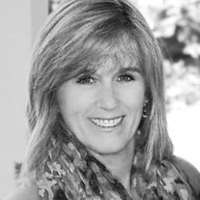

kerri phillips

Kerri Phillips, SLP.D, CCC-SLP

Kerri R. Phillips holds the SLP.D. in speech-language pathology from Nova Southeastern University. She is a Professor and Program Director for the Graduate Program in Speech-Language Pathology at Louisiana Tech University.  Her research interests are ethics, supervision, outcomes data, and child language.  She currently serves as the President of the National Council of State Boards of Examiners; member of the ASHA Advisory Council, and ASHA Continuing Education Board.


Related Courses

The Ripple Effect of Stuttering: A Community-Based Approach
Presented by Craig Coleman, MA, CCC-SLP, BCS-F, ASHA Fellow, Mary Weidner, PhD, CCC-SLP
Video

Presenters

Craig Coleman, MA, CCC-SLP, BCS-F, ASHA FellowMary Weidner, PhD, CCC-SLP
Course: #9217Level: Intermediate2 Hours
  'Good reminders about stuttering best practices'   Read Reviews
This is Part 2 of a four-part series. The stuttering experience has a ripple effect that extends far beyond the child who stutters. Parents, teachers, peers, and others must possess both knowledge and skills to best support children who stutter. This course will highlight new clinical tools and resources to provide a community-based treatment approach for stuttering. (Part 1 - Course 9278, Part 3 - Course 9301, Part 4 - Course 9304)

20Q: Infection Control Strategies for SLPs
Presented by A.U. Bankaitis Smith, PhD
Text

Presenter

A.U. Bankaitis Smith, PhD
Course: #9729Level: Intermediate1 Hour
  'This course was informative and useful to me, as I work with young children in a school setting'   Read Reviews
Speech-language pathologists are expected by policy authorities to apply appropriate measures to protect patients, co-workers and themselves in clinical situations that may expose individuals to infectious microbes. This article provides practical guidelines for implementing infection control principles within the context of the COVID-19 pandemic, including discussion of personal protective equipment (PPE) and disinfecting and cleaning products.

Thickened Liquids in Clinical Practice: The Plot “Thickens”
Presented by Angela Mansolillo, MA, CCC-SLP, BCS-S
Video

Presenter

Angela Mansolillo, MA, CCC-SLP, BCS-S
Course: #10497Level: Intermediate1 Hour
  'The presenter was excellent – extremely knowledgeable, knew her stuff and presented in a clear engaging way'   Read Reviews
Clinicians who utilize thickened liquids in their clinical practice are aware of their benefits, but what about the risks and contraindications? Advantages and disadvantages of thickened liquids are reviewed in this course with a focus on clinical outcomes, including impacts on medication administration, lung health, and hydration. Product types are evaluated to facilitate appropriate choices for individual clients.

SLP in the NICU: An Overview
Presented by Anna Manilla, MS, CCC-SLP, CLC
Video

Presenter

Anna Manilla, MS, CCC-SLP, CLC
Course: #11267Level: Introductory1 Hour
  'Provided great information for a SLP that is not in the NICU setting'   Read Reviews
This course provides an introductory overview of Speech-Language Pathology services in the Neonatal Intensive Care Unit (NICU), including the unique environment, the SLP’s role, and key components of neonatal care. Topics include cue-based and supportive feeding strategies, instrumental assessments, and approaches for empowering and supporting parents and caregivers.

Dysphagia in Neurodegenerative Disease
Presented by Debra M. Suiter, PhD, CCC-SLP, BCS-S
Video

Presenter

Debra M. Suiter, PhD, CCC-SLP, BCS-S
Course: #9732Level: Intermediate1 Hour
  'This course was a good, thorough overview of ALS and Parkinson's'   Read Reviews
Dysphagia is common in individuals with amyotrophic lateral sclerosis (ALS) and Parkinson’s disease. This course discusses the underlying pathophysiology and appropriate treatment programs for each disease, as well as use of alternate methods of nutrition/hydration.