

This text-based course is a written transcript of the course, "Supporting Children with ASD in the Classroom", presented by Dr. Sylvia Diehl on January 19, 2011.
Click Here to View Supplemental Handouts
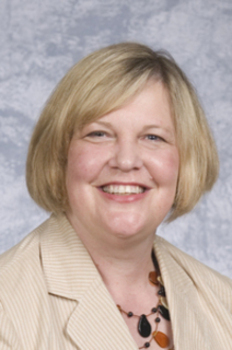
>> Amy Hansen: Good afternoon everyone. Welcome to the Nancy McKinley Lecture Series focusing on Autism Spectrum Disorders and Asperger Syndrome. All events this week are in cooperation with the University of Wisconsin Eau Claire and we're very pleased that you could join us today. Today's expert seminar, " Supporting Children with ASD in the Classroom", is presented by the talented Dr. Sylvia Diehl. Dr. Sylvia Diehl is a faculty member of the University of South Florida Communication Sciences and Disorders department where she teaches courses in autism, augmentative and alternative communication, language disorders and developmental disabilities. She has served as a consultant in the area of autism spectrum disorders for the National Education Association, American Speech and Hearing Association, along with numerous state organizations and school districts. Dr. Diehl has created online course work for the Florida Department of Education and a master clinician series for ASHA. Her research and publication interests focus on consistent frameworks to support learning and communication in children with ASD in classroom settings. So welcome Dr. Diehl and thank you so much for sharing your expertise with us today.
[Applause]
Introduction
>> Dr. Sylvia Diehl: It is my pleasure to be here today to discuss "A Problem Solving Process for Teams Serving Children with Asperger Spectrum Disorders" and I'm so happy to see so many of you excited and getting empowered to work with children that I love. So let's get started because we have an awful lot to get to in one hour. First the objectives of today are to identify established interventions defined by the National Standards Project, to describe characteristics of children with autism spectrum disorders that influence communication and learning success in the school context and to apply a teaming process that aligns learning priorities with evidence based practice. We'll also discuss a few of those evidence based practices as it applies to the case study that we will look at and investigate.
National Standards Project
So first let's consider the National Standards Project. Before this time we really looked to the National Research Council for their report, which is still a fine report. But the difference between the National Standards Project and National Research Council's reported of 2000 is that this report includes both group and single case studies and this is really vital in our quest to use evidence based practice for children with autism because much of our work has been done with single case studies because of the idiosyncratic nature of our children. It is available for you for free at the website provided on these slides (www.nationalautismcenter.org/affiliates/reports.php) and what it did was it took treatment literature that really targets the core characteristics of ASD between 1957 and the fall of 2007 through a series of reviewing which we'll talk about briefly.
It categorized those interventions into Established, Emerging, Unestablished and Ineffective/harmful. However, in our quest to provide evidence-based strategy for our children we can't just look at this report and say, "Oh, that is an established treatment. I'm using that. That is an emerging strategy. I'm not going to use that." and make those kinds of judgments without really understanding why certain interventions are in certain categories. So it is really important to know the study and literature to interpret the categories correctly. We're going to talk just briefly about those.
Supporting Children with ASD in the Classroom
April 1, 2011
Related Courses
1
https://www.speechpathology.com/slp-ceus/course/ripple-effect-stuttering-community-based-9217
The Ripple Effect of Stuttering: A Community-Based Approach
This is Part 2 of a four-part series. The stuttering experience has a ripple effect that extends far beyond the child who stutters. Parents, teachers, peers, and others must possess both knowledge and skills to best support children who stutter. This course will highlight new clinical tools and resources to provide a community-based treatment approach for stuttering. (Part 1 - Course 9278, Part 3 - Course 9301, Part 4 - Course 9304)
auditory, textual, visual
129
USD
Subscription
Unlimited COURSE Access for $129/year
OnlineOnly
SpeechPathology.com
www.speechpathology.com
The Ripple Effect of Stuttering: A Community-Based Approach
This is Part 2 of a four-part series. The stuttering experience has a ripple effect that extends far beyond the child who stutters. Parents, teachers, peers, and others must possess both knowledge and skills to best support children who stutter. This course will highlight new clinical tools and resources to provide a community-based treatment approach for stuttering. (Part 1 - Course 9278, Part 3 - Course 9301, Part 4 - Course 9304)
9217
Online
PT120M
The Ripple Effect of Stuttering: A Community-Based Approach
Presented by Craig Coleman, MA, CCC-SLP, BCS-F, ASHA Fellow, Mary Weidner, PhD, CCC-SLP
Course: #9217Level: Intermediate2 Hours
ASHA/0.2 Intermediate, Professional; Calif SLPAB/2.0; IACET/0.2; Kansas LTS-S1370/2.0; SAC/2.0
This is Part 2 of a four-part series. The stuttering experience has a ripple effect that extends far beyond the child who stutters. Parents, teachers, peers, and others must possess both knowledge and skills to best support children who stutter. This course will highlight new clinical tools and resources to provide a community-based treatment approach for stuttering. (Part 1 - Course 9278, Part 3 - Course 9301, Part 4 - Course 9304)
2
https://www.speechpathology.com/slp-ceus/course/20q-infection-control-strategies-for-9729
20Q: Infection Control Strategies for SLPs
Speech-language pathologists are expected by policy authorities to apply appropriate measures to protect patients, co-workers and themselves in clinical situations that may expose individuals to infectious microbes. This article provides practical guidelines for implementing infection control principles within the context of the COVID-19 pandemic, including discussion of personal protective equipment (PPE) and disinfecting and cleaning products.
textual, visual
129
USD
Subscription
Unlimited COURSE Access for $129/year
OnlineOnly
SpeechPathology.com
www.speechpathology.com
20Q: Infection Control Strategies for SLPs
Speech-language pathologists are expected by policy authorities to apply appropriate measures to protect patients, co-workers and themselves in clinical situations that may expose individuals to infectious microbes. This article provides practical guidelines for implementing infection control principles within the context of the COVID-19 pandemic, including discussion of personal protective equipment (PPE) and disinfecting and cleaning products.
9729
Online
PT60M
20Q: Infection Control Strategies for SLPs
Presented by A.U. Bankaitis Smith, PhD
Course: #9729Level: Intermediate1 Hour
ASHA/0.1 Intermediate, Professional; Calif SLPAB/1.0; IACET/0.1; Kansas LTS-S1370/1.0; SAC/1.0
Speech-language pathologists are expected by policy authorities to apply appropriate measures to protect patients, co-workers and themselves in clinical situations that may expose individuals to infectious microbes. This article provides practical guidelines for implementing infection control principles within the context of the COVID-19 pandemic, including discussion of personal protective equipment (PPE) and disinfecting and cleaning products.
3
https://www.speechpathology.com/slp-ceus/course/thickened-liquids-in-clinical-practice-10497
Thickened Liquids in Clinical Practice: The Plot “Thickens”
Clinicians who utilize thickened liquids in their clinical practice are aware of their benefits, but what about the risks and contraindications? Advantages and disadvantages of thickened liquids are reviewed in this course with a focus on clinical outcomes, including impacts on medication administration, lung health, and hydration. Product types are evaluated to facilitate appropriate choices for individual clients.
auditory, textual, visual
129
USD
Subscription
Unlimited COURSE Access for $129/year
OnlineOnly
SpeechPathology.com
www.speechpathology.com
Thickened Liquids in Clinical Practice: The Plot “Thickens”
Clinicians who utilize thickened liquids in their clinical practice are aware of their benefits, but what about the risks and contraindications? Advantages and disadvantages of thickened liquids are reviewed in this course with a focus on clinical outcomes, including impacts on medication administration, lung health, and hydration. Product types are evaluated to facilitate appropriate choices for individual clients.
10497
Online
PT60M
Thickened Liquids in Clinical Practice: The Plot “Thickens”
Presented by Angela Mansolillo, MA, CCC-SLP, BCS-S
Course: #10497Level: Intermediate1 Hour
ASHA/0.1 Intermediate, Professional; Calif SLPAB/1.0; IACET/0.1; Kansas LTS-S1370/1.0; SAC/1.0
Clinicians who utilize thickened liquids in their clinical practice are aware of their benefits, but what about the risks and contraindications? Advantages and disadvantages of thickened liquids are reviewed in this course with a focus on clinical outcomes, including impacts on medication administration, lung health, and hydration. Product types are evaluated to facilitate appropriate choices for individual clients.
4
https://www.speechpathology.com/slp-ceus/course/slp-in-nicu-overview-11267
SLP in the NICU: An Overview
This course provides an introductory overview of Speech-Language Pathology services in the Neonatal Intensive Care Unit (NICU), including the unique environment, the SLP’s role, and key components of neonatal care. Topics include cue-based and supportive feeding strategies, instrumental assessments, and approaches for empowering and supporting parents and caregivers.
auditory, textual, visual
129
USD
Subscription
Unlimited COURSE Access for $129/year
OnlineOnly
SpeechPathology.com
www.speechpathology.com
SLP in the NICU: An Overview
This course provides an introductory overview of Speech-Language Pathology services in the Neonatal Intensive Care Unit (NICU), including the unique environment, the SLP’s role, and key components of neonatal care. Topics include cue-based and supportive feeding strategies, instrumental assessments, and approaches for empowering and supporting parents and caregivers.
11267
Online
PT60M
SLP in the NICU: An Overview
Presented by Anna Manilla, MS, CCC-SLP, CLC
Course: #11267Level: Introductory1 Hour
ASHA/0.1 Introductory, Professional; Calif SLPAB/1.0; IACET/0.1; IL EITP/1.0; Kansas LTS-S1370/1.0; SAC/1.0
This course provides an introductory overview of Speech-Language Pathology services in the Neonatal Intensive Care Unit (NICU), including the unique environment, the SLP’s role, and key components of neonatal care. Topics include cue-based and supportive feeding strategies, instrumental assessments, and approaches for empowering and supporting parents and caregivers.
5
https://www.speechpathology.com/slp-ceus/course/dysphagia-in-neurodegenerative-disease-9732
Dysphagia in Neurodegenerative Disease
Dysphagia is common in individuals with amyotrophic lateral sclerosis (ALS) and Parkinson’s disease. This course discusses the underlying pathophysiology and appropriate treatment programs for each disease, as well as use of alternate methods of nutrition/hydration.
auditory, textual, visual
129
USD
Subscription
Unlimited COURSE Access for $129/year
OnlineOnly
SpeechPathology.com
www.speechpathology.com
Dysphagia in Neurodegenerative Disease
Dysphagia is common in individuals with amyotrophic lateral sclerosis (ALS) and Parkinson’s disease. This course discusses the underlying pathophysiology and appropriate treatment programs for each disease, as well as use of alternate methods of nutrition/hydration.
9732
Online
PT60M
Dysphagia in Neurodegenerative Disease
Presented by Debra M. Suiter, PhD, CCC-SLP, BCS-S
Course: #9732Level: Intermediate1 Hour
ASHA/0.1 Intermediate, Professional; Calif SLPAB/1.0; IACET/0.1; Kansas LTS-S1370/1.0; SAC/1.0
Dysphagia is common in individuals with amyotrophic lateral sclerosis (ALS) and Parkinson’s disease. This course discusses the underlying pathophysiology and appropriate treatment programs for each disease, as well as use of alternate methods of nutrition/hydration.