

SpeechPathology.com Phone: 800-242-5183


EDU Healthcare Opportunities

Speech-Language Pathology and Mental Health

Sarah Aielli, MS, CCC-SLP, Mallory Wallace, MS, CCC-SLP

October 10, 2016

Share:

Question

Why should SLPs be involved in mental health? 

Answer

Based on the research, there are three main reasons why speech pathologists should be involved in mental health. The first reason is that there is a high comorbidity or prevalence of children with language impairment in the population of children with emotional-behavioral disorders. One meta-analysis showed that 81% of children with emotional-behavioral disorders had below-average language skills (Hollo, Wehby and Oliver, 2014). This meta-analysis looked at 22 different studies which found that the mean comprehensive standard language score was 76. Pretty significant language deficits exist within this population.

There are also similar figures for pragmatic language and social communication, which also occur at a high prevalence for these children. A study by Benner showed that three out of four children with EBD have significant pragmatic language deficits (Benner, Nelson, and Epstein, 2002).

The second reason we should be involved in mental health and in psychiatry is that the population is often underdiagnosed and underserved when it comes to our services. A study done in 2001 showed that as many as 88% of children identified with EBD had never been evaluated for speech and language issues (Hyter et al., 2001 as cited in Armstrong, 2011).

Additionally, it has been found that one out of three children referred for EBD had previous undiagnosed language impairments (Cohen et al., 1998). In general, children with emotional-behavioral disorders have speech and language issues that go untreated. It also works the other way: Children with language disorders may also exhibit characteristics of EBD that go unaddressed.

A third point is that SLPs should be involved in the prevention of emotional and behavioral disorders. Longitudinal studies have shown an increase in psychiatric disorders in later life for children identified earlier with speech or language impairment (Beitchman et al., 2001; Clegg, Hollis, Mawhood, & Rutter, 2004, as cited in Pearce et al., 2014). It’s important that we, as SLPs, identify these children and treat these language issues as early as possible.

Studies have suggested that our services in treating language processing issues may be crucial in the prevention of some psychiatric disorders (Toppelberg and Shapiro, 2000). Furthermore, the early identification and treatment of language issues may reduce later problem behaviors (Brownlie et al., 2004). 

Sarah Aielli, MS, CCC-SLP is a Speech-Language Pathologist at Cincinnati Children’s Hospital Medical Center, College Hill.  Sarah primarily works with the inpatient and residential programs in the Division of Psychiatry, but also provides outpatient therapy.  Sarah specializes in the evaluation and treatment of children and adolescents (ages 3 through 17 years of age) who have emotional and behavioral disorders, language disorders and social communication disorders. 

Mallory Wallace, MS, CCC-SLP is a Speech-Language Pathologist at Cincinnati Children’s Hospital Medical Center, College Hill.  She provides individual and group evaluation and treatment in the inpatient program of Psychiatry as well as the outpatient program at College Hill. Her area of interest and expertise is working with children and families impacted by language disorders and social communication disorders in children and adolescents (ages 3 to 17) with a history of abuse, neglect, and emotional-behavioral difficulties.  
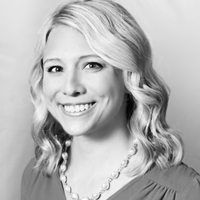

sarah aielli

Sarah Aielli, MS, CCC-SLP

Sarah Aielli, MS, CCC-SLP is a Speech-Language Pathologist at Cincinnati Children’s Hospital Medical Center, College Hill.  Sarah primarily works with the inpatient and residential programs in the Division of Psychiatry, but also provides outpatient therapy.  Sarah specializes in the evaluation and treatment of children and adolescents (ages 3 through 17 years of age) who have emotional and behavioral disorders, language disorders and social communication disorders. Sarah has been with the Division of Speech Pathology since August 2009. Sarah earned her master of science in speech-language pathology at Duquesne University.


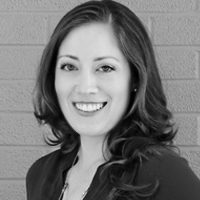
mallory wallace

Mallory Wallace, MS, CCC-SLP

Mallory Wallace, MS, CCC-SLP is a Speech-Language Pathologist at Cincinnati Children’s Hospital Medical Center, College Hill.  She provides individual and group evaluation and treatment in the inpatient program of Psychiatry as well as the outpatient program at College Hill. Her area of interest and expertise is working with children and families impacted by language disorders and social communication disorders in children and adolescents (ages 3 to 17) with a history of abuse, neglect, and emotional-behavioral difficulties.  Mallory has been with the Division of Speech Pathology since July 2008. Mallory earned her master of science in speech-language pathology at Miami University.

Related Courses

Dyslexia and Developmental Language Disorder: School-Based Screenings, Assessments, Interventions, and Implementation Science
Presented by Tiffany Hogan, PhD, CCC-SLP, FASHA
Video

Presenter

Tiffany Hogan, PhD, CCC-SLP, FASHA
Course: #11016Level: Intermediate1 Hour
  'Would love a follow up course on “how to implement better screeners and awareness”'   Read Reviews
Developmental language disorder (DLD) – a neurodiversity that occurs in 10% of the population and that makes learning vocabulary and grammar difficult - is the most commonly co-occurring learning disability associated with dyslexia, a word reading difficulty. DLD and dyslexia are described in this course with a focus on how they are the same and different. Actionable, practice solutions for improving educational outcomes for those with DLD and dyslexia through response to intervention and implementation science are discussed.

Reading Comprehension and the SLP: Foundational Understanding
Presented by Angie Neal, MS, CCC-SLP
Audio

Presenter

Angie Neal, MS, CCC-SLP
Course: #10763Level: Intermediate1 Hour
  'Excellent presentation by an excellent presenter'   Read Reviews
This is Part 1 of a two-part series. This course provides SLPs with foundational knowledge needed to directly address and collaboratively support reading comprehension across all grade levels. Models of language and reading comprehension, comprehension processes vs. products, instruction in comprehension skills vs. strategies, factors in reading comprehension difficulties, and connections to general education are discussed.

Reading Comprehension and the SLP: Contributions of Language
Presented by Angie Neal, MS, CCC-SLP
Video

Presenter

Angie Neal, MS, CCC-SLP
Course: #10764Level: Intermediate1 Hour
  'Instructor was engaging'   Read Reviews
This is Part 2 of a two-part series. The connections between reading comprehension and areas of language such as vocabulary, morphosyntax and social communication are described in this course. Implications for intervention/instruction and collaboration with educators are also discussed.

Orthographic Phonology: A Deeper Dive
Presented by Katie E. Squires, PhD, CCC-SLP, BCS-CL, Lisa Barnett, B.Ed
Video

Presenters

Katie E. Squires, PhD, CCC-SLP, BCS-CLLisa Barnett, B.Ed
Course: #11024Level: Intermediate2 Hours
  'This was really great information, but it was also somewhat overwhelming, as I've never heard of SW,I and so much of the information was intense'   Read Reviews
This course is designed for those who already have a basic understanding of the linguistic basis of spelling. Participants will transcribe phonemes and phones using the International Phonetic Alphabet (IPA), build awareness that syllable division in written form may obscure the structure and meaning of a word, classify the types of bases, and describe what letters are doing in words when they aren’t representing a sound.

20Q: Dynamics of School-Based Speech and Language Therapy Variables
Presented by Kelly Farquharson, PhD, CCC-SLP, Anne Reed, MS, CCC-SLP
Text

Presenters

Kelly Farquharson, PhD, CCC-SLPAnne Reed, MS, CCC-SLP
Course: #10002Level: Advanced1 Hour
  'I really appreciate the examples and the data'   Read Reviews
This course reviews dynamics of speech and language therapy variables such as session frequency, intervention intensity, and dosage, and how these are impacted by different service delivery models. It discusses how therapy outcomes are related to therapy quality, IEP goals, and SLP-level variables such as job satisfaction and caseload size.

Our site uses cookies to improve your experience. By using our site, you agree to our Privacy Policy.