What do you recommend for home practice for /r/ remediation?
Answer
Keep track of all the different /r/'s that the child can say successfully in therapy. Write them all down on a list and send home those specific words. I do not send home any words that they cannot say successfully with me. I find that the more successful they are and the more confidently they can be at home practicing, the fewer battles they have with the parent.
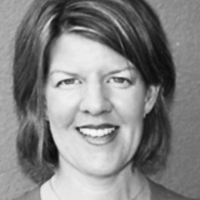
Christine Ristuccia, M.S. CCC-SLP received her Master of Science degree in communicative disorders at the University of Redlands, Redlands, CA and a Bachelor of Science degree in health sciences from San Diego State University. Christine founded Say It Right in 1999. She is the author of several books and has spoken throughout the United States on articulation disorders in addition to yoga products and cards.
Christine Ristuccia, M.S., CCC-SLP
Christine Ristuccia, M.S. CCC-SLP, received her Master of Science degree in communicative disorders at the University of Redlands, Redlands, CA and a Bachelor of Science degree in health sciences from San Diego State University. Christine is an experienced school-based speech-language pathologist and most recently worked for Savannah-Chatham County School District, Savannah, Georgia at the preschool and elementary levels. She has worked with a wide range of communicative disorders ranging from preschool to adulthood.
Christine founded Say It Right in 1999. Her phonemic approach to /r/ remediation, The Entire World of R, sets the standard for efficient, successful correction of many articulation errors. Christine is the author of several books and has spoken throughout the United States on articulation disorders in addition to yoga products and cards.
Related Courses
1https://www.speechpathology.com/slp-ceus/course/20q-dynamics-school-based-speech-1000220Q: Dynamics of School-Based Speech and Language Therapy VariablesThis course reviews dynamics of speech and language therapy variables such as session frequency, intervention intensity, and dosage, and how these are impacted by different service delivery models. It discusses how therapy outcomes are related to therapy quality, IEP goals, and SLP-level variables such as job satisfaction and caseload size.textual, visual129USDSubscriptionUnlimited COURSE Access for $129/yearOnlineOnlySpeechPathology.comwww.speechpathology.com20Q: Dynamics of School-Based Speech and Language Therapy VariablesThis course reviews dynamics of speech and language therapy variables such as session frequency, intervention intensity, and dosage, and how these are impacted by different service delivery models. It discusses how therapy outcomes are related to therapy quality, IEP goals, and SLP-level variables such as job satisfaction and caseload size.10002OnlinePT60M
This course reviews dynamics of speech and language therapy variables such as session frequency, intervention intensity, and dosage, and how these are impacted by different service delivery models. It discusses how therapy outcomes are related to therapy quality, IEP goals, and SLP-level variables such as job satisfaction and caseload size.
2https://www.speechpathology.com/slp-ceus/course/sleuthing-for-s-and-r-9237Sleuthing for /s/ and /r/: Facilitating Strategies for Residual Sound ErrorsThis course will discuss the rationale and strategies for teaching production of /s/ and /r/ for upper elementary school-age children and older. Errors on these two sounds are considered residual when production continues to be inaccurate beyond the developmental age of acquisition.auditory, textual, visual129USDSubscriptionUnlimited COURSE Access for $129/yearOnlineOnlySpeechPathology.comwww.speechpathology.comSleuthing for /s/ and /r/: Facilitating Strategies for Residual Sound ErrorsThis course will discuss the rationale and strategies for teaching production of /s/ and /r/ for upper elementary school-age children and older. Errors on these two sounds are considered residual when production continues to be inaccurate beyond the developmental age of acquisition.9237OnlinePT120M
'I enjoyed the learning the strategies presented for tackling /s/ and /r/ and vowel-/r/ as well as exploring technological methods, such as the Spectrogram for treating /r/ sound errors'Read Reviews
AG Bell - LSLS/2.0 Domain 3; ASHA/0.2 Introductory, Professional; Calif SLPAB/2.0; IACET/0.2; Kansas LTS-S1370/2.0; SAC/2.0
This course will discuss the rationale and strategies for teaching production of /s/ and /r/ for upper elementary school-age children and older. Errors on these two sounds are considered residual when production continues to be inaccurate beyond the developmental age of acquisition.
3https://www.speechpathology.com/slp-ceus/course/20q-continuum-approach-for-sorting-1000820Q: A Continuum Approach for Sorting Out Processing DisordersThere is a good deal of confusion among audiologists and speech-language pathologists when a diagnosis of “processing disorder” is introduced. This course presents a continuum model to differentiate processing disorders into acoustic, phonemic, or linguistic aspects so that assessment and treatment can become more focused and effective. The roles of audiologists and SLPs in relation to processing disorders are described, and compensatory strategies for differing aspects of processing are presented.textual, visual129USDSubscriptionUnlimited COURSE Access for $129/yearOnlineOnlySpeechPathology.comwww.speechpathology.com20Q: A Continuum Approach for Sorting Out Processing DisordersThere is a good deal of confusion among audiologists and speech-language pathologists when a diagnosis of “processing disorder” is introduced. This course presents a continuum model to differentiate processing disorders into acoustic, phonemic, or linguistic aspects so that assessment and treatment can become more focused and effective. The roles of audiologists and SLPs in relation to processing disorders are described, and compensatory strategies for differing aspects of processing are presented.10008OnlinePT60M
There is a good deal of confusion among audiologists and speech-language pathologists when a diagnosis of “processing disorder” is introduced. This course presents a continuum model to differentiate processing disorders into acoustic, phonemic, or linguistic aspects so that assessment and treatment can become more focused and effective. The roles of audiologists and SLPs in relation to processing disorders are described, and compensatory strategies for differing aspects of processing are presented.
4https://www.speechpathology.com/slp-ceus/course/20q-evaluation-and-treatment-speech-872920Q: Evaluation and Treatment of Speech/Resonance Disorders and Velopharyngeal DysfunctionChildren with speech and resonance disorders (hypernasality, hyponasality, and cul-de-sac resonance) and/or nasal emission present challenges for speech-language pathologists (SLPs) in all settings. This article will help participants to recognize resonance disorders and the characteristics of velopharyngeal dysfunction, and provide appropriate management.textual, visual129USDSubscriptionUnlimited COURSE Access for $129/yearOnlineOnlySpeechPathology.comwww.speechpathology.com20Q: Evaluation and Treatment of Speech/Resonance Disorders and Velopharyngeal DysfunctionChildren with speech and resonance disorders (hypernasality, hyponasality, and cul-de-sac resonance) and/or nasal emission present challenges for speech-language pathologists (SLPs) in all settings. This article will help participants to recognize resonance disorders and the characteristics of velopharyngeal dysfunction, and provide appropriate management.8729OnlinePT60M
Children with speech and resonance disorders (hypernasality, hyponasality, and cul-de-sac resonance) and/or nasal emission present challenges for speech-language pathologists (SLPs) in all settings. This article will help participants to recognize resonance disorders and the characteristics of velopharyngeal dysfunction, and provide appropriate management.
5https://www.speechpathology.com/slp-ceus/course/r-what-you-want-to-10018/R/: What You Want to Know RIGHT NOWThis 30-minute Fast Class describes the most important method for eliciting /r/, discusses the fastest way to generalize /r/ and achieve automaticity, and explores several troubleshooting strategies. While there is much more to know about /r/, this is the “quick and dirty" version to achieve success.auditory, textual, visual129USDSubscriptionUnlimited COURSE Access for $129/yearOnlineOnlySpeechPathology.comwww.speechpathology.com/R/: What You Want to Know RIGHT NOWThis 30-minute Fast Class describes the most important method for eliciting /r/, discusses the fastest way to generalize /r/ and achieve automaticity, and explores several troubleshooting strategies. While there is much more to know about /r/, this is the “quick and dirty" version to achieve success.10018OnlinePT30M
This 30-minute Fast Class describes the most important method for eliciting /r/, discusses the fastest way to generalize /r/ and achieve automaticity, and explores several troubleshooting strategies. While there is much more to know about /r/, this is the “quick and dirty" version to achieve success.