

SpeechPathology.com Phone: 800-242-5183


EDU Healthcare Opportunities

Success with Expository Text, Comprehension & Inferencing

Success with Expository Text, Comprehension & Inferencing
Vicki Reed, Ed.D., CCC-SLP, BRS-CL
November 9, 2012
Share:

 This text-based course is a transcript of the seminar, “Success with Expository Text, Comprehension & Inferencing,” presented by Vicki Reed, Ed.D., CCC-SLP, BRS-CL.  

To all you participants, thank you for joining the lecture today, and thank you for your interest in adolescents and adolescent language. 

As you can tell from the title of this presentation, it should be no surprise that I’m going to be talking about three interrelated language abilities that are absolutely critical to academic achievement, but are especially problematic for a large percentage of adolescents.  Before we start I want to give a bit of an overview.  I’m going to start talking about terminology so that we can all get on the same page.  This will lead us into a discussion of discourse and types of discourse, which then leads us into a discussion of exposition and expectations for secondary school students, including an introduction to the notion that academic-specific discourse differs across subjects and that this difference in academic discourse looms really large in middle and high schools.  It is something that we have to begin to pay attention to with these adolescents. 

We will then talk about who these adolescents are that struggle with language and literacy. This will take us to a discussion of some of the things that SLPs can do or at least need to consider in their approaches to helping these adolescents, and in particular, helping them to succeed with discourse and literacy in the areas of comprehension, inferencing and paraphrasing. 

This is oodles to get through today.  I’m going to go very, very quickly.  For that reason, I would like to hold questions until the end of the presentation.  By the way, don’t worry about taking notes.  The information that I’m talking about is all in the slides, so hopefully that will help you not feel as rushed as we go through. 

Definitions and Perspectives

Literacy and Literate Behaviors

I am going to start with literacy and what it is.  Literacy does not just have one definition.  There are many, many different definitions of literacy.  What it is NOT is just basic reading and writing skills - and the key word there is “basic.”  Literacy is so much more than basic reading and writing.  Basic reading and writing are really only the starting points of becoming literate and being able to engage in what we call literate behaviors. 

vicki reed

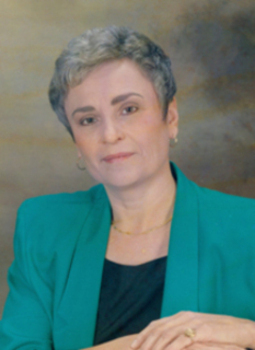
Vicki Reed, Ed.D., CCC-SLP, BRS-CL

Dr. Vicki A. Reed, a Professor, ASHA Fellow, and Board Recognized Specialist in Child Language, has 30+ years’ experience teaching and researching in the area of child and adolescent language development and disorders at the graduate and undergraduate levels, including mentorship of students' research.  She has numerous publications and presentations in the area.


Related Courses

SLPs as Authors: The Art and Science of Writing Children’s Books for Language Intervention
Presented by Shari Robertson, PhD, CCC-SLP, BCS-CL, ASHA Fellow and Honors, NAP Fellow
Video
Course: #11268Level: Intermediate1 Hour
Given their unique expertise in both typical and delayed speech and language development, SLPs are ideal candidates to author children’s books. Guided by the empirical evidence regarding the specific qualities of books that determine positive outcomes, this seminar will provide potential, budding, and closet SLP authors with key information on how to create children’s books that provide optimal support for language goals.

Principles for AI-Assisted Language Sample Analysis, in partnership with the University of Vermont
Presented by Darin Woolpert, PhD, CCC-SLP
Video
Course: #11270Level: Advanced1 Hour
This course reviews various methods for using technology to simplify language sample analysis (LSA). A particular focus is exploring the benefits and limitations of using AI chatbots (like ChatGPT) to assist with LSA.

Facilitating First Verbs through Shared Book Reading
Presented by Susan Hendler Lederer, PhD, CCC-SLP
Video
Course: #9735Level: Introductory1 Hour
This course discusses early verb acquisition, choosing first verb targets, and a variety of strategies to facilitate verb learning using children’s picture books as a therapy context.

Principles for AI-Assisted Spanish Language Sample Analysis, in partnership with the University of Vermont
Presented by Darin Woolpert, PhD, CCC-SLP
Video
Course: #11271Level: Advanced1 Hour
This course examines the utility of bilingual language sample analysis (LSA), with a particular focus on Spanish LSA. Various technological tools to simplify Spanish LSA, including using AI-chatbots like ChatGPT, are discussed.

Dyslexia and Developmental Language Disorder: School-Based Screenings, Assessments, Interventions, and Implementation Science
Presented by Tiffany Hogan, PhD, CCC-SLP, FASHA
Video
Course: #11016Level: Intermediate1 Hour
Developmental language disorder (DLD) – a neurodiversity that occurs in 10% of the population and that makes learning vocabulary and grammar difficult - is the most commonly co-occurring learning disability associated with dyslexia, a word reading difficulty. DLD and dyslexia are described in this course with a focus on how they are the same and different. Actionable, practice solutions for improving educational outcomes for those with DLD and dyslexia through response to intervention and implementation science are discussed.

Our site uses cookies to improve your experience. By using our site, you agree to our Privacy Policy.