

SpeechPathology.com Phone: 800-242-5183


PTS, Inc - Where Your Passion and Career Converge. Talk to us today!

Assistive Technologies; Awareness and Opportunity

Assistive Technologies; Awareness and Opportunity
Robin Springer
May 5, 2003
Share:


In Russia, children with disabilities can be denied an education. In America, we have IDEA. In Brazil, it is acceptable to deny employment to a person with a disability, specifically because he or she is disabled. In the United States we have the Ticket to Work program. In Italy, there are buildings with steps but no wheelchair ramps. In the U.S., we have the Americans with Disabilities Act (ADA).

Even though we do not accept discrimination as inevitable and have made strides to assist the more than 52 million Americans1 with disabilities by passing legislation including the ADA and the Tech Act, why, then, are there so many people who are not getting the technology that will enable them to succeed in school, in the workplace, and in everyday life?

''Losing It'' is a documentary that examines the experiences of people with disabilities around the world. Sharon Greytak, the New York resident who conceived of and directed, ''Losing It,'' did so because she wanted to know if people in other countries had similar experiences to her own.

Greytak introduces viewers to six people in five countries. In Russia, Hong Kong, Brazil, and Italy, the assistive technology presented was comprised of crutches, an old wheelchair, and a wheelchair ramp. In the United States the technology consisted of a mouthstick and speech-recognition software that had not been upgraded in at least two years.

While the documentary was in no way a scientific study on how people with disabilities are treated, it allows us a glimpse into how these people with disabilities see themselves and how they are perceived by others. The lack of equality and accessibility in these countries is accepted as a way of life. As one of the people with whom Greytak visited said, ''This is the way things are.''
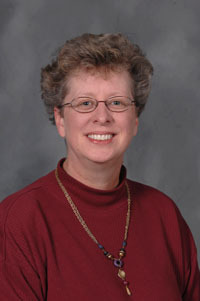
 

robin springer

Robin Springer


Related Courses

Textbook: Achieving Communication Competence
Presented by Yvonne Gillette, PhD, ASHA Fellow
Text
Course: #10517Level: Advanced15 Hours
Based on the textbook, Achieving Communication Competence, this course describes a three-step process to create an effective intervention plan for people with severe communication disabilities. Assessment of environmental factors and communication skills, implementation and modification of intervention plans, and progress reporting are discussed.

Home Sweet Home: Transitioning AAC to the Home Environment
Presented by Trina Becker, MS, CCC-SLP
Video
Course: #9760Level: Intermediate1 Hour
This course discusses ways to transition augmentative/alternative communication (AAC) from the speech therapy room to the home environment, for children who use AAC. Strategies for planning and implementing carryover of skills from the educational setting are shared.

Inpatient Management of Speech and Swallowing After Total Glossectomy
Presented by Jodi Knott, MS, CCC-SLP, BCS-S, CLT
Video
Course: #9768Level: Introductory1 Hour
This is Part 1 of a two-part series. This course introduces participants to a “road map” for rehabilitation and restoration of speech and swallowing, following a total glossectomy. It discusses postoperative anatomy and physiology and the importance of preoperative counseling, along with approaches to inpatient management and the SLP’s role across the continuum of care.

AAC: Taking the ‘OMG’ out of Report Writing and Treatment Planning
Presented by Kim Winter, MA, CCC-SLP
Video
Course: #10536Level: Intermediate1.5 Hours
This course describes how to document augmentative/alternative communication (AAC) assessment outcomes and treatment planning for adult clients, in order to obtain funding of a speech-generating device (SGD) via Medicare or other third-party payers. Medicare SGD coverage, access methods to assess, required evaluation report elements, and client competencies to target in goals and treatment are discussed.

Outpatient Management of Speech and Swallowing After Total Glossectomy
Presented by Jodi Knott, MS, CCC-SLP, BCS-S, CLT
Video
Course: #9770Level: Introductory1.5 Hours
This is Part 2 of a two-part series. This course introduces a “road map” for rehabilitation and restoration of speech and swallowing, following a total glossectomy in the outpatient setting. It discusses unique treatment approaches including the use of palatal augmentation, augmentative communication, and other methods that have been successful at improving functional speech and swallowing outcomes. Sequelae of radiation therapy are also reviewed.

Our site uses cookies to improve your experience. By using our site, you agree to our Privacy Policy.