

SpeechPathology.com Phone: 800-242-5183


eLuma - Students Need You - September 2025

Screening for Auditory Processing Disorders

Martha Coen Cummings, Ph.D,CCC

January 29, 2007

Share:

Question

What is a good way to screen an 11 year old child for a possible auditory processing problem?

Answer

A speech pathologist cannot make that diagnosis, so the "screen" is simply that: a way to determine whether the family should be referred to an audiologist who specializes in the testing of Auditory Processing Disorders in children (norms are age-based due to the development of the auditory system, so it's important that adult norms not be applied).

A speech pathologist can begin by screening peripheral hearing status using an audiometer, per ASHA recommendations, followed by administration of the SCAN-C by Robert Keith (under the appropriate administration protocol indicated for this test). The SCAN-C includes the following subtests: Filtered Words, Auditory Figure Ground, Competing Words, Competing Sentences, and then yields a composite test score that's standardized.

It's imperative to remember that, although some language-based speech pathology tests may use the term "auditory processing" in their subtest description, they are not isolating the auditory system and therefore are NOT considered APD screeners: they are only testing language skills in a sound field environment, without isolating temporal conditions, background noise, or individual ear performance.

Martha Coen Cummings, Ph.D. CCC is the Coordinator of Speech Pathology Services at Cincinnati Children's Hospital Medical Center, Mason Outpatient satellite. She focuses on research and treatment of children with disorders of auditory processing and voice. She is a former President and Chairperson of numerous committees for the following professional associations: the Ohio Speech-Language and Hearing Association, Northern Kentucky Speech-Language *Hearing Association, and the Southwestern Ohio Speech-Language-Hearing Association. Martha has previously presented numerous workshops and full-day presentations on central auditory processing disorders, metalinguistic therapy, and voice assessment/therapy at the local, state, national, and international levels.
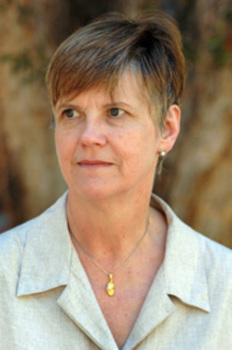

martha coen cummings

Martha Coen Cummings, Ph.D,CCC


Related Courses

Facilitating First Verbs through Shared Book Reading
Presented by Susan Hendler Lederer, PhD, CCC-SLP
Video

Presenter

Susan Hendler Lederer, PhD, CCC-SLP
Course: #9735Level: Introductory1 Hour
  'The presenter gave very useful resources such as songs and books that I can use in therapy'   Read Reviews
This course discusses early verb acquisition, choosing first verb targets, and a variety of strategies to facilitate verb learning using children’s picture books as a therapy context.

Recognizing Fetal Alcohol Spectrum Disorders (FASD) to Improve Outcomes
Presented by Dan Dubovsky, MSW, FASD Specialist
Video

Presenter

Dan Dubovsky, MSW, FASD Specialist
Course: #8724Level: Intermediate1 Hour
  'very informative, with research evidence and suggestions!'   Read Reviews
This course will provide information on the importance of identifying individuals who may have a fetal alcohol spectrum disorder. It will examine how the brain damage from prenatal alcohol exposure affects one's behavior, and best approaches for working with individuals with FASD and their families.

The Role of Relationships in Early Development: The Connection Between Experiences and Language Capacity
Presented by Alison D. Peak, LCSW, IMH-E
Video

Presenter

Alison D. Peak, LCSW, IMH-E
Course: #8727Level: Introductory1 Hour
  'The instructor, Alison Peake, provided new insights related to communication intervention which will positively impact my approach'   Read Reviews
This course will provide information on the connection between early experiences and early formation of language. Through this framework, the course will look at the impact of Adverse Childhood Experiences (ACEs) and serve-and-return interactions on the language gap that exists for many communities across the US.

20Q: A Continuum Approach for Sorting Out Processing Disorders
Presented by Gail J. Richard, PhD, CCC-SLP
Text

Presenter

Gail J. Richard, PhD, CCC-SLP
Course: #10008Level: Intermediate1 Hour
  'Very informative'   Read Reviews
There is a good deal of confusion among audiologists and speech-language pathologists when a diagnosis of “processing disorder” is introduced. This course presents a continuum model to differentiate processing disorders into acoustic, phonemic, or linguistic aspects so that assessment and treatment can become more focused and effective. The roles of audiologists and SLPs in relation to processing disorders are described, and compensatory strategies for differing aspects of processing are presented.

Feeding Development: What is Typical?
Presented by Rhonda Mattingly Williams, Ed.D, CCC-SLP
Video

Presenter

Rhonda Mattingly Williams, Ed.D, CCC-SLP
Course: #10520Level: Introductory1 Hour
  'The presenter was very clear and organized'   Read Reviews
An introduction to multiple factors - including relationships - associated with feeding development, as well as a review of typical milestones, are provided in this course. An overview of conditions that can disrupt the normal developmental process is also presented.

Our site uses cookies to improve your experience. By using our site, you agree to our Privacy Policy.