

SpeechPathology.com Phone: 800-242-5183


Austill's Educational Therapy Services - Voice - November 2025

Standardized Tests for Pragmatics

Nancy Creaghead, PhD, CCC-SLP

February 10, 2003

Share:

Question

Besides the authentic assesssment, what are other ways(standardized or not) to do a pragmatic assessment when doing a complete language evaluation for elementary age students?

Answer

I certainly understand the need to try to find a time-effective way to assess children with pragmatic difficulty -- and also the value of a test score for placement. However, I really have a hard time talking about tests with these children because the very nature of pragmatic skills/problems is so intimately tired to context (place, participates, activity, topic, etc.). It seems to me that the problem is that a test gives only a very small specific sample of the child's behavior in only one context (individual testing), which then leads right back to working only on specific skills. Isn't that the problem that generated the first question -- that addressing specific identified pragmatic goals in therapy did not lead to effective interaction by the child?. SO!! I am going to have to hold on to my plea for authentic assessment.

Having said this, lists of tests can be found in the references that I provided. Below is one of the references that includes a list of tests -- and also two tests that can be found in the list.

Bernstein, D. K., Tiegerman-Farber, E., (2002). Language and communication disorders in children. Boston: Allyn & Bacon.

Wiig & Secord (1989), Test of Language Competence -- Expanded Edition, Psychological Corporation.

Phelps-Terasaki & Phelps-Gunn (1992), Test of Pragmatic language (TOPL), Pro-Ed
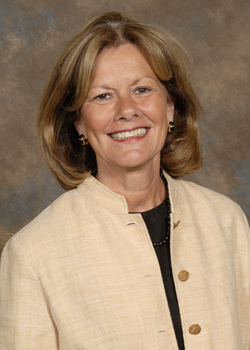

nancy creaghead

Nancy Creaghead, PhD, CCC-SLP

Professor, University of Cincinnati

Dr. Nancy Creaghead is Past President of the American Speech-Language-Hearing Association. She is Professor and Head of the Department of Communication Sciences and Disorders at the University of Cincinnati. Her teaching and research are in the area of child language development and disorders. She has been responsible for the development of outreach and distance learning programs for individuals working as speech therapists in the schools who need to obtain a master's degree. She has presented at numerous workshops and meetings at the local, state, national and international levels, including the 1978 through 2003 ASHA conventions, and is widely published. Dr. Creaghead is co-owner of a private practice, which provides speech-language services to children, primarily in Head Start and other preschool settings. She is a past president of the Ohio Speech-Language-Hearing Association and the Council of Academic Programs in Communication Sciences and Disorders. She has completed a three-year term as ASHA Vice President for Professional Practices in Speech-Language Pathology. She holds an M.S. from Purdue University and Ph.D. from the University of Cincinnati. She is an ASHA Fellow and has received Honors of the Ohio Speech-Language-Hearing Association and the Council of Academic Programs in Communication Sciences and Disorders.


Related Courses

SLPs as Authors: The Art and Science of Writing Children’s Books for Language Intervention
Presented by Shari Robertson, PhD, CCC-SLP, BCS-CL, ASHA Fellow and Honors, NAP Fellow
Video

Presenter

Shari Robertson, PhD, CCC-SLP, BCS-CL, ASHA Fellow and Honors, NAP Fellow
Course: #11268Level: Intermediate1 Hour
  'Great ideas and resources'   Read Reviews
Given their unique expertise in both typical and delayed speech and language development, SLPs are ideal candidates to author children’s books. Guided by the empirical evidence regarding the specific qualities of books that determine positive outcomes, this seminar will provide potential, budding, and closet SLP authors with key information on how to create children’s books that provide optimal support for language goals.

Principles for AI-Assisted Language Sample Analysis, in partnership with the University of Vermont
Presented by Darin Woolpert, PhD, CCC-SLP
Video

Presenter

Darin Woolpert, PhD, CCC-SLP
Course: #11270Level: Advanced1 Hour
  'This course made me aware of the use of AI by SLPs as well as the pros and cons'   Read Reviews
This course reviews various methods for using technology to simplify language sample analysis (LSA). A particular focus is exploring the benefits and limitations of using AI chatbots (like ChatGPT) to assist with LSA.

Facilitating First Verbs through Shared Book Reading
Presented by Susan Hendler Lederer, PhD, CCC-SLP
Video

Presenter

Susan Hendler Lederer, PhD, CCC-SLP
Course: #9735Level: Introductory1 Hour
  'The presenter gave very useful resources such as songs and books that I can use in therapy'   Read Reviews
This course discusses early verb acquisition, choosing first verb targets, and a variety of strategies to facilitate verb learning using children’s picture books as a therapy context.

Principles for AI-Assisted Spanish Language Sample Analysis, in partnership with the University of Vermont
Presented by Darin Woolpert, PhD, CCC-SLP
Video

Presenter

Darin Woolpert, PhD, CCC-SLP
Course: #11271Level: Advanced1 Hour
  'He presented ethical considerations multiple times throughout the course reminding the clinician that AI can be both beneficial and harmful towards your assessment if not used appropriately'   Read Reviews
This course examines the utility of bilingual language sample analysis (LSA), with a particular focus on Spanish LSA. Various technological tools to simplify Spanish LSA, including using AI-chatbots like ChatGPT, are discussed.

Dyslexia and Developmental Language Disorder: School-Based Screenings, Assessments, Interventions, and Implementation Science
Presented by Tiffany Hogan, PhD, CCC-SLP, FASHA
Video

Presenter

Tiffany Hogan, PhD, CCC-SLP, FASHA
Course: #11016Level: Intermediate1 Hour
  'Would love a follow up course on “how to implement better screeners and awareness”'   Read Reviews
Developmental language disorder (DLD) – a neurodiversity that occurs in 10% of the population and that makes learning vocabulary and grammar difficult - is the most commonly co-occurring learning disability associated with dyslexia, a word reading difficulty. DLD and dyslexia are described in this course with a focus on how they are the same and different. Actionable, practice solutions for improving educational outcomes for those with DLD and dyslexia through response to intervention and implementation science are discussed.

Our site uses cookies to improve your experience. By using our site, you agree to our Privacy Policy.