SpeechPathology.com Phone: 800-242-5183


Strides Therapy & Educational Services - Join Team #2 - November 2025

What Are The Key Signs That A Client Needs To Be Referred To Audiology?

Carly Alicea, AuD, PhD, CCC-A

October 15, 2025

Share:

Question

What are the key signs that a client needs to be referred to audiology?

Answer

A speech-language pathologist (SLP) should consider an audiology referral based on several key signs, or "red flags," observed in a client. The primary goal is to rule out hearing loss before diagnosing a speech or language disorder. This applies to both children and adults.

Key indicators that an SLP should refer a client include:

  • Frequent requests for repetition

  • Inconsistent responses to sounds or speech

  • Difficulty with phonological awareness that may be influenced by hearing status

  • Delayed speech and language milestones in children

  • History of frequent ear infections, which may affect hearing

  • Difficulty hearing in noisy environments

The key point is to rule out hearing loss before diagnosing any speech or language disorder. This applies to both children and adults. Knowing a client’s hearing levels ensures that hearing loss is not an unrecognized factor influencing communication before you proceed with a diagnosis.

This Ask the Expert is an edited excerpt from the course Audiology Essentials for Non-Audiologists, presented in partnership with RIT/National Technical Institute for the Deaf, presented by Carly Alicea, AuD, PhD, CCC-A​​​​​​. 


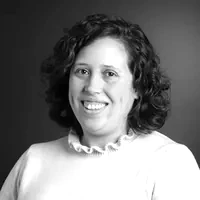
carly alicea

Carly Alicea, AuD, PhD, CCC-A

Carly Alicea is a clinical audiologist in the Department of Communication Studies and Services at Rochester Institute of Technology/National Technical Institute for the Deaf (RIT/NTID). She provides a full range of diagnostic and rehabilitative services to RIT/NTID students, faculty, staff, and dependents.

Dr. Alicea also serves as a member of the department's committee on continuing education, planning, coordinating, and teaching continuing education workshops for other audiologists and speech-language pathologists at and outside the institute. Additionally, she has worked as an assistant professor teaching courses in speech-language pathology and audiology and at a non-profit speech and hearing clinic serving children and adults from a diverse array of backgrounds. 


Related Courses

Enhancing Access: Classroom Acoustics & Assistive Listening Technology for DHH Students, in partnership with RIT/National Technical Institute for the Deaf
Presented by Carly Alicea, AuD, PhD, CCC-A
Video

Presenter

Carly Alicea, AuD, PhD, CCC-A
Course: #11196Level: Introductory1 Hour
  'Incorporating classroom strategies'   Read Reviews
This course equips audiologists and speech-language pathologists to evaluate classroom acoustics and their impact on Deaf and Hard of Hearing (DHH) students. The course provides discussion on assistive listening technologies and applies practical strategies to support appropriate accommodations and improved student outcomes.

Audiology Essentials for Non-Audiologists, presented in partnership with RIT/National Technical Institute for the Deaf
Presented by Carly Alicea, AuD, PhD, CCC-A
Video

Presenter

Carly Alicea, AuD, PhD, CCC-A
Course: #11206Level: Introductory1 Hour
  'Clear and concise'   Read Reviews
This course provides a foundational understanding of hearing, hearing loss, and intervention options for speech-language pathologists or other non-audiologists working with deaf or hard of hearing people. This course equips participants with key knowledge to enhance interdisciplinary collaboration and improve client care.

Supporting Neurodiverse and Deaf Neurodiverse Individuals, in partnership with RIT/National Technical Institute for the Deaf
Presented by Haley Boring, MS, CCC-SLP
Video

Presenter

Haley Boring, MS, CCC-SLP
Course: #1033917Level: Introductory1 Hour
  'Good slides to support info provided'   Read Reviews
This course reviews the basics of the neurodiversity movement, presents some of the current supporting research, examines common communication differences between neurotypical and neurodiverse communicators, and discusses how neurodiverse and Deaf or Hard of Hearing identities may intersect to impact communication in a hearing healthcare environment.

Working with ASL Interpreters, in partnership with RIT/National Technical Institute for the Deaf
Presented by Vanessa Murphy, AuD, CCC-A
Video

Presenter

Vanessa Murphy, AuD, CCC-A
Course: #1033919Level: Introductory1 Hour
  'i enjoyed the speaker'   Read Reviews
This course focuses on a culturally sensitive approach to working with American Sign Language (ASL) interpreters and deaf, Deaf, and Hard of Hearing patients as a hearing healthcare provider.

Measuring What Matters: Success with Hearing Aids and Cochlear Implants for Adults with Severe-to-Profound Hearing Loss, in partnership with RIT/National Technical Institute for the Deaf
Presented by Rebecca Jackson, AuD, CCC-A
Video

Presenter

Rebecca Jackson, AuD, CCC-A
Course: #1033926Level: Intermediate1 Hour
  'The presenter was knowledgeable and organized'   Read Reviews
This course explores how success with hearing aids and cochlear implants can be defined beyond traditional outcome measures, emphasizing client-centered outcomes and quality-of-life measures. Through clinical strategies, case studies, and assessment tools, participants learn to support diverse communication goals for adults with severe-to-profound hearing loss.

Our site uses cookies to improve your experience. By using our site, you agree to our Privacy Policy.