
SpeechPathology.com Phone: 800-242-5183


Austill's Educational Therapy Services - Voice - November 2025

Speech-Language Pathology Assistants (SLPAs): Current trends and perspectives

Speech-Language Pathology Assistants (SLPAs): Current trends and perspectives
Jennifer Ostergren, Ph.D., CCC-SLP
June 26, 2014

This text-based course is a transcript of the webinar, “Speech-Language Pathology Assistants (SLPAs): Current trends and perspectives,” presented by Jennifer A. Ostergren, Ph.D., CCC-SLP. 

>> Dr. Jennifer Ostergren:  It is very timely to be discussing speech-language pathology assistants.  When I last presented on SpeechPathology.com, we still had all documents from ASHA relative to training and use, and some scope of practice for SLPAs.  I am excited to be back to discuss some new things that are happening at ASHA relative to the new scope of practice. I plan to also give an overview about current trends nationally, not just relative to ASHA, but state entities as well. 

Course Agenda

The majority of this course will focus on describing the core details of ASHA’s 2013 scope of practice document.  I will highlight some current ASHA resources, talk about the scope of practice, and then move on to current trends in licensure and regulation of SLPAs.  Lastly, I will describe ASHA’s recently adopted affiliation program for support personnel.  I will add as I go through the presentation what I call “detours.”  If there is information that I want to add, some additional detail, or share additional resources with you, we will pop away from the ASHA scope for a bit and talk about that, and then go back to it.

ASHA Resources

There are quite a few resources that are now available for SLPAs and for those who supervise SLPAs.  Several of them are contained on ASHA’s policy document webpage (http://www.asha.org/policy). One of the newest resources is the SLPA Scope of Practice (ASHA, 2013).  Prior to that, there were several documents that addressed support personnel including audiology assistants. This new document collapsed several of those resources into one scope and added quite a bit of detail in important areas, such as ethics and liability issues.  It also expanded the scope quite and made some clarifying statements that I think are very helpful.  The SLPA Scope of Practice is probably the first go-to resource for both SLPAs and their supervisors. 

ASHA also has the Ethical Issues Concerning the Use of Support Personnel (ASHA, 2004) that teases out more ethical discussions about support personnel. 

The Code of Ethics is a resource that is always relevant when discussing SLPAs and supervision.  That is actually talked about within the scope of practice document, but the actual code itself is an important document to refer to. 

ASHA’s Confidentiality document is an important resource (2013). 

There is also a document, Clinical Supervision in SLPs (in General), that is a technical report that came out in 2008.  That is helpful for getting a foundation on supervision.  It discusses Anderson's levels of feedback in supervision and is a good overview on the topic of supervision. 

Another new document that came out in 2013 from an ad hoc committee on supervision (http://www.asha.org/uploadedFiles/Supervisors-Knowledge-Skills-Report.pdf) discusses support personnel, recommendations about future directions relative to supervision, and also supervision of graduate students, supervision of CFYs, and supervision of support personnel.  Those are all very helpful, good resources in that area. 

Also in terms of ASHA’s website, there are some practice portals that contain the ASHA website and other resources all housed in one location on a specific topic.  Specifically, there is one on professional practice issues related to SLPAs (http://www.asha.org/Practice-Portal/Professional-Issues/Speech-Language-Pathology-Assistants).  The practice portals have summaries of the new ASHA scope as well as any new information that is added.  I like this new approach because it is a living document of sorts.  The ASHA Scope was recently published and it is very helpful, but as new information becomes available, the practice portal is a good source for finding information that might be related. 

jennifer ostergren

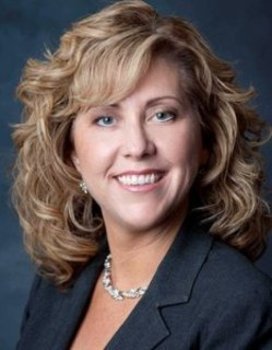
Jennifer Ostergren, Ph.D., CCC-SLP

Dr. Jennifer Ostergren is an Assistant Professor and Graduate Advisor in the Department of Communicative Disorders at California State University, Long Beach (CSULB). Her areas of specialization include neurologic language and cognitive disorders, and professional practice issues. She has published and presented in the areas of supervision and the training and use of speech-language pathology assistants (SLPAs), including a recently published book on the topic of SLPAs, titled “Speech-Language Pathology Assistants: A resource manual.”  She currently serves on the Coordinating Committee for the American Speech-Language and Hearing Association (ASHA) Special Interest Group 11 (Supervision and Administration) and is a Site Visitor for the Council on Academic Accreditation in Audiology and Speech-Language Pathology (CAA). Dr. Ostergren is the recipient of the 2012 NSSHLA Editor’s Choice Award for two articles published on the topic of SLPAs and a Ukleja Center for Ethical Leadership award for curriculum development in the area of ethics and SLPAs.  For the past several years, she has taught courses for Bachelor’s level students interested in obtaining registration as an SLPA in the state of California.


Related Courses

The Ripple Effect of Stuttering: A Community-Based Approach
Presented by Craig Coleman, MA, CCC-SLP, BCS-F, ASHA Fellow, Mary Weidner, PhD, CCC-SLP
Video
Course: #9217Level: Intermediate2 Hours
This is Part 2 of a four-part series. The stuttering experience has a ripple effect that extends far beyond the child who stutters. Parents, teachers, peers, and others must possess both knowledge and skills to best support children who stutter. This course will highlight new clinical tools and resources to provide a community-based treatment approach for stuttering. (Part 1 - Course 9278, Part 3 - Course 9301, Part 4 - Course 9304)

20Q: Infection Control Strategies for SLPs
Presented by A.U. Bankaitis Smith, PhD
Text
Course: #9729Level: Intermediate1 Hour
Speech-language pathologists are expected by policy authorities to apply appropriate measures to protect patients, co-workers and themselves in clinical situations that may expose individuals to infectious microbes. This article provides practical guidelines for implementing infection control principles within the context of the COVID-19 pandemic, including discussion of personal protective equipment (PPE) and disinfecting and cleaning products.

Thickened Liquids in Clinical Practice: The Plot “Thickens”
Presented by Angela Mansolillo, MA, CCC-SLP, BCS-S
Video
Course: #10497Level: Intermediate1 Hour
Clinicians who utilize thickened liquids in their clinical practice are aware of their benefits, but what about the risks and contraindications? Advantages and disadvantages of thickened liquids are reviewed in this course with a focus on clinical outcomes, including impacts on medication administration, lung health, and hydration. Product types are evaluated to facilitate appropriate choices for individual clients.

SLP in the NICU: An Overview
Presented by Anna Manilla, MS, CCC-SLP, CLC
Video
Course: #11267Level: Introductory1 Hour
This course provides an introductory overview of Speech-Language Pathology services in the Neonatal Intensive Care Unit (NICU), including the unique environment, the SLP’s role, and key components of neonatal care. Topics include cue-based and supportive feeding strategies, instrumental assessments, and approaches for empowering and supporting parents and caregivers.

Dysphagia in Neurodegenerative Disease
Presented by Debra M. Suiter, PhD, CCC-SLP, BCS-S
Video
Course: #9732Level: Intermediate1 Hour
Dysphagia is common in individuals with amyotrophic lateral sclerosis (ALS) and Parkinson’s disease. This course discusses the underlying pathophysiology and appropriate treatment programs for each disease, as well as use of alternate methods of nutrition/hydration.