

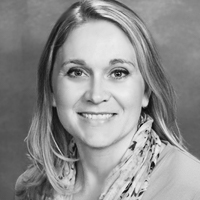
This text-based course is a transcript of the webinar, “Intervention for Selective Mutism: The Nuts and Bolts of Behavioral Treatment,” presented by Aimee Kotrba, Ph.D. >> Aimee Kotrba: Today I will talk briefly about assessing selective mutism, but mostly about treating. The reason I want to talk to you about assessment of selective mutism, even though that is a separate discussion, is that it is important in terms of driving our treatment and strategies that we determine would be best to use with a child. History of Selective MutismI would like to do a quick history on selective mutism (SM). Identified back in 1877, it was originally called aphasia voluntaria. A physician in a boarding school noticed that there were some children in the boarding school who were not speaking. He ruled out any physical cause of this lack of speech and began to believe that these children had some sort of traumatic episode in their background history causing them to choose not to speak. In 1934, the name was changed to elective mutism. Finally, in 1994 our research caught up with us and it has been renamed as selective mutism. The research indicated that these children were not electing not to speak; this was not a choice that was being made nor was it based in a trauma. Instead we were finding that it was an anxiety disorder. These children were becoming so overwhelmed by the anxiety about speech that they were unable to speak. It still sounds a little strange. It still sounds as if they are choosing not to speak, because it is called selective; as if they are selecting not to speak. Instead what we believe is that the mutism occurs in select environments. For the vast majority of these children, they can speak very normally at home when they are with parents or their immediate family, and even some extended family members. However when they are in select situations or with certain select people, they become mute because the anxiety is so great. Definition of SMI have a definition of SM via the DSM-IV. As many know the DSM-V has come out, but there have been no major changes in terms of the definition. It is a specific anxiety disorder. If you think of anxiety as being an umbrella term that characterizes many different disorders, like social phobia, specific phobias, obsessive-compulsive disorder, and generalized anxiety disorder, selective mutism would fall under that umbrella of anxiety disorders. When the DSM-V came out, SM was moved from where it existed before, which was in this island of other disorders of childhood, and moved under anxiety disorders, specifically under social phobia. Now in the DSM-V, it is considered to be a childhood severe manifestation of social phobia. That has positives and negatives. On the plus side, we do believe that it is an anxiety disorder, and so it fits well in that category. On the downside, there are some characteristics of SM that are very different from social phobia. We believe social phobia manifests at an older age. We usually say that the beginning of social phobia is somewhere around 11 to 13 years old, whereas in children with selective mutism, we see the symptoms manifest usually as soon as they enter school, somewhere around three to five years old. There are even some different physiological characteristics between social phobia and selective mutism. Children with social phobia have many outward characteristics of anxiety. They get stomachaches, headaches, chills and muscle tension. In children with selective mutism, sometimes you see that and sometimes you do not. There is some discussion and debate about whether or not that is an appropriate place to characterize it, but that is where it is listed for now. Again, selective mutism is the consistent ongoing failure to speak in specific social situations, especially school. School tends to be the most anxiety-provoking place for these children to speak. There are children on my caseload who speak in school, but not out in public. The expectation is that they are going to speak in school and that is how they get good grades. They are perfectionistic. However out in public, where there is less predictability and they are not being graded, these children are unable to speak or do not have quite as much motivation to speak. Selective mutism is not due to a primary language disorder. However, it is extremely co-occurrent with language disorders. We believe about 35% to 75% of the children who have selective mutism also have a co-occurring language-based learning disorder or language disorder. Other disorders like stuttering or autism have been ruled out as the primary cause of the lack of speech. That does not mean that children cannot have stuttering and selective mutism or autism and selective mutism. It simply means that the child is able to speak at home to a developmentally appropriate degree, but out in public or in the school setting, there is a significant decrease in that speech. Selective mutism is relatively rare affecting about 1% of children in elementary school settings. However, prevalence rates may be growing. We believe that the behavior is deliberate self-protection. It is not deliberate oppositionality, even though it can look a little oppositional at times. When we review the research, we do not find that these children have higher rates overall compared to typically developing peers, in terms of oppositionality or defiance. Sometimes this can look a little oppositional in its presentation, and I believe that is because children become so anxious and overwhelmed that they fight back when it comes to facing those fears. If there was something that you were very afraid of, for me it is roller coasters, and you tried to get me on a roller coaster, I would look pretty oppositional. I would be kicking and screaming, not because I am an oppositional person, but because I am terrified of roller coasters. We believe that the children who look oppositional may be in part because they are trying as hard as they can...
Intervention for Selective Mutism: The Nuts and Bolts of Behavioral Treatment
March 10, 2014
Related Courses
1
https://www.speechpathology.com/slp-ceus/course/ripple-effect-stuttering-community-based-9217
The Ripple Effect of Stuttering: A Community-Based Approach
This is Part 2 of a four-part series. The stuttering experience has a ripple effect that extends far beyond the child who stutters. Parents, teachers, peers, and others must possess both knowledge and skills to best support children who stutter. This course will highlight new clinical tools and resources to provide a community-based treatment approach for stuttering. (Part 1 - Course 9278, Part 3 - Course 9301, Part 4 - Course 9304)
auditory, textual, visual
129
USD
Subscription
Unlimited COURSE Access for $129/year
OnlineOnly
SpeechPathology.com
www.speechpathology.com
The Ripple Effect of Stuttering: A Community-Based Approach
This is Part 2 of a four-part series. The stuttering experience has a ripple effect that extends far beyond the child who stutters. Parents, teachers, peers, and others must possess both knowledge and skills to best support children who stutter. This course will highlight new clinical tools and resources to provide a community-based treatment approach for stuttering. (Part 1 - Course 9278, Part 3 - Course 9301, Part 4 - Course 9304)
9217
Online
PT120M
The Ripple Effect of Stuttering: A Community-Based Approach
Presented by Craig Coleman, MA, CCC-SLP, BCS-F, ASHA Fellow, Mary Weidner, PhD, CCC-SLP
Course: #9217Level: Intermediate2 Hours
ASHA/0.2 Intermediate, Professional; Calif SLPAB/2.0; IACET/0.2; Kansas LTS-S1370/2.0; SAC/2.0
This is Part 2 of a four-part series. The stuttering experience has a ripple effect that extends far beyond the child who stutters. Parents, teachers, peers, and others must possess both knowledge and skills to best support children who stutter. This course will highlight new clinical tools and resources to provide a community-based treatment approach for stuttering. (Part 1 - Course 9278, Part 3 - Course 9301, Part 4 - Course 9304)
2
https://www.speechpathology.com/slp-ceus/course/20q-infection-control-strategies-for-9729
20Q: Infection Control Strategies for SLPs
Speech-language pathologists are expected by policy authorities to apply appropriate measures to protect patients, co-workers and themselves in clinical situations that may expose individuals to infectious microbes. This article provides practical guidelines for implementing infection control principles within the context of the COVID-19 pandemic, including discussion of personal protective equipment (PPE) and disinfecting and cleaning products.
textual, visual
129
USD
Subscription
Unlimited COURSE Access for $129/year
OnlineOnly
SpeechPathology.com
www.speechpathology.com
20Q: Infection Control Strategies for SLPs
Speech-language pathologists are expected by policy authorities to apply appropriate measures to protect patients, co-workers and themselves in clinical situations that may expose individuals to infectious microbes. This article provides practical guidelines for implementing infection control principles within the context of the COVID-19 pandemic, including discussion of personal protective equipment (PPE) and disinfecting and cleaning products.
9729
Online
PT60M
20Q: Infection Control Strategies for SLPs
Presented by A.U. Bankaitis Smith, PhD
Course: #9729Level: Intermediate1 Hour
ASHA/0.1 Intermediate, Professional; Calif SLPAB/1.0; IACET/0.1; Kansas LTS-S1370/1.0; SAC/1.0
Speech-language pathologists are expected by policy authorities to apply appropriate measures to protect patients, co-workers and themselves in clinical situations that may expose individuals to infectious microbes. This article provides practical guidelines for implementing infection control principles within the context of the COVID-19 pandemic, including discussion of personal protective equipment (PPE) and disinfecting and cleaning products.
3
https://www.speechpathology.com/slp-ceus/course/thickened-liquids-in-clinical-practice-10497
Thickened Liquids in Clinical Practice: The Plot “Thickens”
Clinicians who utilize thickened liquids in their clinical practice are aware of their benefits, but what about the risks and contraindications? Advantages and disadvantages of thickened liquids are reviewed in this course with a focus on clinical outcomes, including impacts on medication administration, lung health, and hydration. Product types are evaluated to facilitate appropriate choices for individual clients.
auditory, textual, visual
129
USD
Subscription
Unlimited COURSE Access for $129/year
OnlineOnly
SpeechPathology.com
www.speechpathology.com
Thickened Liquids in Clinical Practice: The Plot “Thickens”
Clinicians who utilize thickened liquids in their clinical practice are aware of their benefits, but what about the risks and contraindications? Advantages and disadvantages of thickened liquids are reviewed in this course with a focus on clinical outcomes, including impacts on medication administration, lung health, and hydration. Product types are evaluated to facilitate appropriate choices for individual clients.
10497
Online
PT60M
Thickened Liquids in Clinical Practice: The Plot “Thickens”
Presented by Angela Mansolillo, MA, CCC-SLP, BCS-S
Course: #10497Level: Intermediate1 Hour
ASHA/0.1 Intermediate, Professional; Calif SLPAB/1.0; IACET/0.1; Kansas LTS-S1370/1.0; SAC/1.0
Clinicians who utilize thickened liquids in their clinical practice are aware of their benefits, but what about the risks and contraindications? Advantages and disadvantages of thickened liquids are reviewed in this course with a focus on clinical outcomes, including impacts on medication administration, lung health, and hydration. Product types are evaluated to facilitate appropriate choices for individual clients.
4
https://www.speechpathology.com/slp-ceus/course/slp-in-nicu-overview-11267
SLP in the NICU: An Overview
This course provides an introductory overview of Speech-Language Pathology services in the Neonatal Intensive Care Unit (NICU), including the unique environment, the SLP’s role, and key components of neonatal care. Topics include cue-based and supportive feeding strategies, instrumental assessments, and approaches for empowering and supporting parents and caregivers.
auditory, textual, visual
129
USD
Subscription
Unlimited COURSE Access for $129/year
OnlineOnly
SpeechPathology.com
www.speechpathology.com
SLP in the NICU: An Overview
This course provides an introductory overview of Speech-Language Pathology services in the Neonatal Intensive Care Unit (NICU), including the unique environment, the SLP’s role, and key components of neonatal care. Topics include cue-based and supportive feeding strategies, instrumental assessments, and approaches for empowering and supporting parents and caregivers.
11267
Online
PT60M
SLP in the NICU: An Overview
Presented by Anna Manilla, MS, CCC-SLP, CLC
Course: #11267Level: Introductory1 Hour
ASHA/0.1 Introductory, Professional; Calif SLPAB/1.0; IACET/0.1; IL EITP/1.0; Kansas LTS-S1370/1.0; SAC/1.0
This course provides an introductory overview of Speech-Language Pathology services in the Neonatal Intensive Care Unit (NICU), including the unique environment, the SLP’s role, and key components of neonatal care. Topics include cue-based and supportive feeding strategies, instrumental assessments, and approaches for empowering and supporting parents and caregivers.
5
https://www.speechpathology.com/slp-ceus/course/dysphagia-in-neurodegenerative-disease-9732
Dysphagia in Neurodegenerative Disease
Dysphagia is common in individuals with amyotrophic lateral sclerosis (ALS) and Parkinson’s disease. This course discusses the underlying pathophysiology and appropriate treatment programs for each disease, as well as use of alternate methods of nutrition/hydration.
auditory, textual, visual
129
USD
Subscription
Unlimited COURSE Access for $129/year
OnlineOnly
SpeechPathology.com
www.speechpathology.com
Dysphagia in Neurodegenerative Disease
Dysphagia is common in individuals with amyotrophic lateral sclerosis (ALS) and Parkinson’s disease. This course discusses the underlying pathophysiology and appropriate treatment programs for each disease, as well as use of alternate methods of nutrition/hydration.
9732
Online
PT60M
Dysphagia in Neurodegenerative Disease
Presented by Debra M. Suiter, PhD, CCC-SLP, BCS-S
Course: #9732Level: Intermediate1 Hour
ASHA/0.1 Intermediate, Professional; Calif SLPAB/1.0; IACET/0.1; Kansas LTS-S1370/1.0; SAC/1.0
Dysphagia is common in individuals with amyotrophic lateral sclerosis (ALS) and Parkinson’s disease. This course discusses the underlying pathophysiology and appropriate treatment programs for each disease, as well as use of alternate methods of nutrition/hydration.