

SpeechPathology.com Phone: 800-242-5183


AMN Healthcare allied opportunities in any setting, any speciality

Here's How to Do Accent Modification: A Manual for Speech-Language Pathologists, First Edition

Here's How to Do Accent Modification: A Manual for Speech-Language Pathologists, First Edition
Robert McKinney, MA, CCC-SLP
December 31, 2025

To earn CEUs for this article, become a member.

unlimited ceu access $129/year

Join Now

Please note that to complete this course, you will need to read the textbook Here's How to Do Accent Modification: A Manual for Speech-Language Pathologists, First Edition. If you do not already have a copy of the textbook, you can purchase it at Plural Publishing.
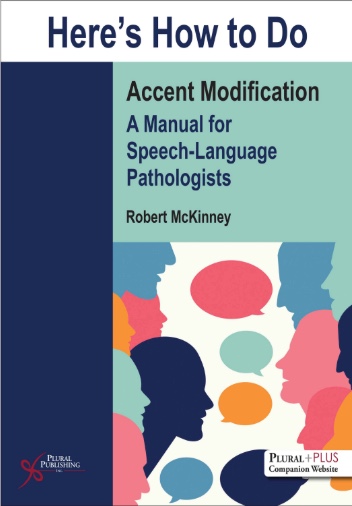
image of book

FAQ: SpeechPathology.com Textbook Continuing Education (CE) Courses 

What is a textbook CE course? 

Our textbook CE courses constitute the CE activity for their respective textbooks. Essentially, these courses provide a way to earn CEUs for the time and effort our members invest in reading these valuable texts. 

Do I need materials for these courses?

Yes! You will need the relevant textbook for any textbook-based courses you wish to take. 

Does SpeechPathology.com charge extra fees for textbook-based courses? 

No. You are responsible for purchasing your textbook, and (as with our other courses) you will need a current SpeechPathology.com membership. SpeechPathology.com does not collect any additional fees for these courses. 

Where is the course content? How do I take this course?

First, register for the course to confirm current availability. Once registered, the course stays in your 'Pending Courses' for 30 days, during which time you must purchase and read the textbook. To receive credit, you must complete the exam before your 30-day registration period ends. Availability is not guaranteed once your 30-day registration expires.

The exam itself is the CE activity you need to complete to earn CEUs for this textbook. 

Questions?
Reach out to  if you have questions or need assistance.
To earn CEUs for this article, become a member.

unlimited ceu access $129/year

Join Now

robert mckinney

Robert McKinney, MA, CCC-SLP

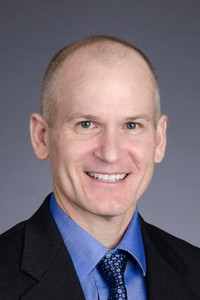
Robert (Bob) McKinney, M.A., CCC-SLP, is the lead Speech-Language Pathologist at the Sweetwater Union High School District, where he heads the district's Culturally/Linguistically Diverse Assessment team. At San Diego State University, he supervises graduate students in the Accent and Communication Training Program and teaches phonetics. He had a 26-year career as a TESOL (Teaching English to Speakers of Other Languages) instructor, teaching and conducting teacher training in six countries, including 17 years at UCSD's English Language Institute. He holds an M.A. in Communicative Disorders, an M.A. in Education/TESOL, and an M.A. in International Relations. He speaks six languages and has worked with clients from more than 80 countries. Bob is active in the California Speech-Language-Hearing Association and has served on its board of directors.


Related Courses

Ethics of Accent Modification
Presented by Robert McKinney, MA, CCC-SLP
Video
Course: #10505Level: Introductory1.5 Hours
Targeted phonological instruction (i.e., “accent modification”) provided by SLPs may help non-native speaking adults communicate more effectively in their new language, but can also prompt ethical concerns. The nature of accents, their connection to linguistic discrimination, and best practices for ethical provision of elective accent modification services are discussed in this course.

20Q: Accents and Accent Modification
Presented by Robert McKinney, MA, CCC-SLP
Text
Course: #10351Level: Intermediate1 Hour
Adults acquiring a new language often face challenges because their speech sounds different, and speech-language pathologists are uniquely suited to help them become more effective communicators in their new language. The nature of non-native accents, aspects of accents to address in therapy, and best practices for the ethical provision of elective accent modification services are described in this course.

Advanced Suprasegmental Training for Accent Modification
Presented by Robert McKinney, MA, CCC-SLP
Live WebinarTue, Sep 22, 2026 at 3:00 pm EDT
Course: #11490Level: Advanced1 Hour
This advanced-level seminar explores key suprasegmental features, such as rate, intonation, linking, syllable stress, word stress, and phrasal stress, which can significantly impact intelligibility and naturalness for non-native speakers. The seminar combines brief theoretical overviews with practical strategies to use in accent modification. Participants will examine common challenges faced by non-native speakers and learn adaptable, client-centered activities to target suprasegmentals effectively.

The SLP and ESL Connection: Bridging Professions to Support Communication
Presented by Robert McKinney, MA, CCC-SLP
Live WebinarThu, Aug 20, 2026 at 12:00 pm EDT
Course: #11504Level: Introductory1 Hour
This course explores the intersection of speech-language pathology and English as a Second Language (ESL), offering SLPs an accessible introduction to concepts from the ESL world that can enhance their work with culturally and linguistically diverse clients. Participants will compare the roles and training of SLPs and ESL educators, gain foundational insight into second language acquisition, and examine English language features that commonly challenge non-native speakers. The course also highlights practical strategies and instructional techniques from ESL that can be adapted for assessment and intervention, along with ideas for collaboration across disciplines. Ideal for clinicians looking to deepen their cultural-linguistic competence, the session bridges theory and practice in an engaging, SLP-relevant way.

Textbook: Achieving Communication Competence
Presented by Yvonne Gillette, PhD, ASHA Fellow
Text
Course: #10517Level: Advanced15 Hours
Based on the textbook, Achieving Communication Competence, this course describes a three-step process to create an effective intervention plan for people with severe communication disabilities. Assessment of environmental factors and communication skills, implementation and modification of intervention plans, and progress reporting are discussed.