iSpeechPathology.com – Call us: 800-242-5183
Austill's Educational Therapy Services - Voice - November 2025

Billing for One Evaluation

Renee Kinder, MS, CCC-SLP, RAC-CT

May 2, 2016

Share:

Question

Why are there different evaluations for cognitive, versus voice, versus dysphagia, etc.? I have been told that I can just bill for one, and the others need to be stuck under treatment.

Answer

Although we hear this often, it is absolutely not true.  ASHA worked with the American Medical Association back in 2014. We now have a new fluency code which is 92521, a new motor speech code (92522), new speech and language code (92523), and new voice code (92524). Those are all new. There are also one-hour time-based codes for evaluations, which have not changed: the aphasia code (96105), the cognitive code (96125), the aural rehab evaluation code; and the AAC evaluation code. Those are called one-hour time-based codes. There is a 31-minute minimum for use of those. If you are working with Medicare Part B clients, you can actually count your documentation time towards your time when using that code. You cannot do that for Medicare Part A, due to the definitions in MDS section O.

It is such a misconception that you can only bill one evaluation and then the rest of it must go under treatment. I think where that comes from, unfortunately, is that with Medicare Part A PPS, those evaluation minutes do not count towards the PPS, so folks try to sneak them into treatment. If it is an evaluation, it is an evaluation. If you are doing straight baselines, it needs to be put in under evaluation. Sometimes, it is more clinically appropriate to space those out. I get calls from therapists, especially folks that are new to SNF, who say, "This client has swallowing issues, voice issues, and he is cognitively impaired. I need to target it all." It may not be clinically appropriate. What you can do is space that out. See what the client really needs at the start of care. Get a good foundation, and then as the client progresses, you can go back and do an evaluation for a new area three to four weeks in. It is not like how some pediatric payers will only pay for one evaluation. It is not that way with Medicare. You can go in and do different evaluations as clinically appropriate and as the beneficiary needs. 

Renee Kinder currently serves as Clinical Specialist for Evergreen Rehabilitation where she provides education and training programs for interdisciplinary team members related to Medicare regulations, documentation requirements, and evidenced based practice patterns. She is currently Vice President of Healthcare for the Kentucky Speech Language Hearing Association, acts as an Ambassador for the Alzheimer’s Association, has provided caregiver trainings for the Alzheimer’s Foundation of America, and is a member of community faculty for the University of Kentucky College of Medicine. 
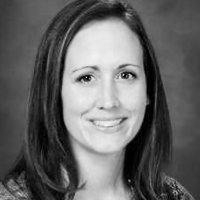

renee kinder

Renee Kinder, MS, CCC-SLP, RAC-CT

Renee currently serves as Clinical Specialist for Evergreen Rehabilitation where she provides education and training programs for interdisciplinary team members related to Medicare regulations, documentation requirements, and evidenced based practice patterns. She is currently Vice President of Healthcare for the Kentucky Speech Language Hearing Association, acts as an Ambassador for the Alzheimer’s Association, has provided caregiver trainings for the Alzheimer’s Foundation of America, and is a member of community faculty for the University of Kentucky College of Medicine. She is a member of ASHA’s Healthcare and Economics Committee and maintains active membership in ASHA Special Interest Groups for Swallowing, Neurology and Gerontology where she is currently Editor of Perspectives on Gerontology.


Related Courses

Treating in the Gray Zone: Post-Acute Care Considerations
Presented by Melissa Collier, MS, CCC-SLP, CHC, CDP
Video

Presenter

Melissa Collier, MS, CCC-SLP, CHC, CDP
Course: #10066Level: Intermediate1 Hour
  'Thoroughly enjoyed this presentation-applicable to current setting and caseload'   Read Reviews
This course helps post-acute care clinicians better understand how to approach treatment when things aren’t black and white. It addresses scenarios such as geriatric frailty/weight loss and diet modification, the paradigm shift to a patient-choice model, legal considerations regarding diet waivers, and the care plan process. The SLP's role on the post-acute interdisciplinary team is also discussed.

Building Your Case for Medical Necessity: The Nuts and Bolts of Skilled Therapy Documentation
Presented by Melissa Collier, MS, CCC-SLP, CHC, CDP
Video

Presenter

Melissa Collier, MS, CCC-SLP, CHC, CDP
Course: #9839Level: Introductory1.5 Hours
  'participants will be able to identify examples of skilled therapy services documentation that support medical necessity and meet Medicare requirements for reimbursement'   Read Reviews
This course provides participants with an understanding of documentation requirements in a post-acute setting, including Medicare regulations and guidelines. It identifies why speech therapy services are denied and ways to mitigate the denial of skilled services, and describes how to document medical necessity.

Gold-Standard Documentation Strategies: Medicare and PDPM SNF Documentation
Presented by Lorelei O'Hara, M.A., CCC-SLP
Video

Presenter

Lorelei O'Hara, M.A., CCC-SLP
Course: #9673Level: Intermediate1.5 Hours
  'Very informative'   Read Reviews
Scrutiny is the name of the game in skilled nursing facility (SNF) clinical service delivery. This course discusses how to create bullet-proof documentation using appropriate language and coding for Medicare Part A and B claims, and how to support the interdisciplinary team with iron-clad support for patient-driven payment model (PDPM) payment components, including cognitive and mood assessment tools.

Dysphagia in Neurodegenerative Disease
Presented by Debra M. Suiter, PhD, CCC-SLP, BCS-S
Video

Presenter

Debra M. Suiter, PhD, CCC-SLP, BCS-S
Course: #9732Level: Intermediate1 Hour
  'Good comparisons between ALS/ PD with appropriate types of interventions'   Read Reviews
Dysphagia is common in individuals with amyotrophic lateral sclerosis (ALS) and Parkinson’s disease. This course discusses the underlying pathophysiology and appropriate treatment programs for each disease, as well as use of alternate methods of nutrition/hydration.

Back to Basics: Goal Writing for School-based SLPs
Presented by Marva Mount, MA, CCC-SLP
Video

Presenter

Marva Mount, MA, CCC-SLP
Course: #8977Level: Introductory1 Hour
  'Good examples given to support how to write SMART goals and what is needed'   Read Reviews
Once eligible for services, students need well-crafted goals in order to meet expectations. This course addresses writing SMART goals for students from collected data.