
iSpeechPathology.com – Call us: 800-242-5183
The Stepping Stones Group Opportunities - December 2025

What Does Speech-Language Pathology Have to do with Mental Health? Considerations for SLPs Working with Children and Adolescents with Emotional and Behavioral Disorders

What Does Speech-Language Pathology Have to do with Mental Health? Considerations for SLPs Working with Children and Adolescents with Emotional and Behavioral Disorders
Sarah Aielli, MS, CCC-SLP, Mallory Wallace, MS, CCC-SLP
October 6, 2016
Share:

This text-based course is a transcript of the webinar, What Does Speech-Language Pathology Have to do with Mental Health? Considerations for SLPs Working with Children and Adolescents with Emotional and Behavioral Disorders, presented by Sarah Aielli, MS, CCC-SLP and Mallory Wallace, MS, CCC-SLP. This course is presented in partnership with Cincinnati Children's Hospital.

Learning Objectives

  1. After this course, participants will be able to describe the relationship between language and social communication disorders and emotional-behavioral disorders.
  2. After this course, participants will be able to verbalize helpful strategies and considerations for initiating services with a child with a mental health diagnosis.
  3. After this course, participants will be able to recognize warning signs of mental illness and access basic resources on mental health.

Introduction and Overview

We divided this course into three main sections. Our first section deals with the background on speech-language pathology and mental health. The second portion will outline what to do if you are assigned a child with an emotional behavioral disorder: what you need to know and where to begin. Thirdly, we’ll touch on what to do if you suspect that one of your current clients has an undiagnosed or untreated emotional behavioral disorder.

Just a few notes on terminology before we begin. Terminology varies a lot by discipline and institution. We will use the following terminology interchangeably throughout the presentation: mental health disorders and diagnoses, psychiatric disorders and diagnoses, emotional-behavioral disorders (EBD) and emotional disturbance (ED). You might also hear us refer to NAMI, which is the National Alliance on Mental Health, and is a private organization. We also often refer to the Substance Abuse and Mental Health Services Administration, or SAMHSA, which is a government organization.

Speech-Language Pathology and Mental Health

To begin, I want to talk about our background and our perspective. We work at CCHMC, in the Division of Psychiatry. We work with children ranging in age from 2 to 18 years old. Our setting includes inpatient units. These are more short-term hospitalizations where children stay on average for about one week. The team works on stabilizing them, evaluating them, and getting services in place for discharge. We also work in the context of residential units or residential programs. These are longer term programs where children maybe have multiple failed inpatient hospitalizations and aren’t doing well in the short term treatment programs, so they recommend a longer term treatment for them (three months to one year).

Our partial hospitalization program is more of a day treatment program, where children come during the day, and then go home in the evening. They receive school, mental health therapies and other therapies through the program. We also work in a preschool program for preschool-aged children with mental health needs. These children often have open cases with child services. Then, finally, our setting includes an inpatient/outpatient therapy program. This is for children who need additional support or services before entering a general outpatient program. These are children that we would refer from our other programs.

The children we work with are admitted to the hospital for a variety of reasons. Most of them are admitted for some type of aggression. This can be verbal aggression. This includes physical aggression to self, others, or property. They’re referred for out-of-control behavior, suicidal ideation, gestures, or attempts, and also for homicidal ideation, gestures, or attempts.
sarah aielli

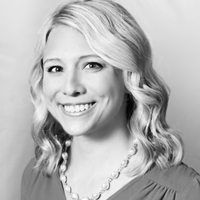
Sarah Aielli, MS, CCC-SLP

Sarah Aielli, MS, CCC-SLP is a Speech-Language Pathologist at Cincinnati Children’s Hospital Medical Center, College Hill.  Sarah primarily works with the inpatient and residential programs in the Division of Psychiatry, but also provides outpatient therapy.  Sarah specializes in the evaluation and treatment of children and adolescents (ages 3 through 17 years of age) who have emotional and behavioral disorders, language disorders and social communication disorders. Sarah has been with the Division of Speech Pathology since August 2009. Sarah earned her master of science in speech-language pathology at Duquesne University.


mallory wallace

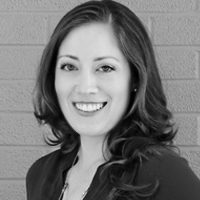
Mallory Wallace, MS, CCC-SLP

Mallory Wallace, MS, CCC-SLP is a Speech-Language Pathologist at Cincinnati Children’s Hospital Medical Center, College Hill.  She provides individual and group evaluation and treatment in the inpatient program of Psychiatry as well as the outpatient program at College Hill. Her area of interest and expertise is working with children and families impacted by language disorders and social communication disorders in children and adolescents (ages 3 to 17) with a history of abuse, neglect, and emotional-behavioral difficulties.  Mallory has been with the Division of Speech Pathology since July 2008. Mallory earned her master of science in speech-language pathology at Miami University.


Related Courses

Dyslexia and Developmental Language Disorder: School-Based Screenings, Assessments, Interventions, and Implementation Science
Presented by Tiffany Hogan, PhD, CCC-SLP, FASHA
Video
Course: #11016Level: Intermediate1 Hour
Developmental language disorder (DLD) – a neurodiversity that occurs in 10% of the population and that makes learning vocabulary and grammar difficult - is the most commonly co-occurring learning disability associated with dyslexia, a word reading difficulty. DLD and dyslexia are described in this course with a focus on how they are the same and different. Actionable, practice solutions for improving educational outcomes for those with DLD and dyslexia through response to intervention and implementation science are discussed.

Reading Comprehension and the SLP: Foundational Understanding
Presented by Angie Neal, MS, CCC-SLP
Audio
Course: #10763Level: Intermediate1 Hour
This is Part 1 of a two-part series. This course provides SLPs with foundational knowledge needed to directly address and collaboratively support reading comprehension across all grade levels. Models of language and reading comprehension, comprehension processes vs. products, instruction in comprehension skills vs. strategies, factors in reading comprehension difficulties, and connections to general education are discussed.

Reading Comprehension and the SLP: Contributions of Language
Presented by Angie Neal, MS, CCC-SLP
Video
Course: #10764Level: Intermediate1 Hour
This is Part 2 of a two-part series. The connections between reading comprehension and areas of language such as vocabulary, morphosyntax and social communication are described in this course. Implications for intervention/instruction and collaboration with educators are also discussed.

Orthographic Phonology: A Deeper Dive
Presented by Katie E. Squires, PhD, CCC-SLP, BCS-CL, Lisa Barnett, B.Ed
Video
Course: #11024Level: Intermediate2 Hours
This course is designed for those who already have a basic understanding of the linguistic basis of spelling. Participants will transcribe phonemes and phones using the International Phonetic Alphabet (IPA), build awareness that syllable division in written form may obscure the structure and meaning of a word, classify the types of bases, and describe what letters are doing in words when they aren’t representing a sound.

20Q: Dynamics of School-Based Speech and Language Therapy Variables
Presented by Kelly Farquharson, PhD, CCC-SLP, Anne Reed, MS, CCC-SLP
Text
Course: #10002Level: Advanced1 Hour
This course reviews dynamics of speech and language therapy variables such as session frequency, intervention intensity, and dosage, and how these are impacted by different service delivery models. It discusses how therapy outcomes are related to therapy quality, IEP goals, and SLP-level variables such as job satisfaction and caseload size.