
iSpeechPathology.com – Call us: 800-242-5183
Therapy Source Career Center - June 2019

Creating a Functional Therapy Plan: Therapy Goals & SOAP Note Documentation

Creating a Functional Therapy Plan: Therapy Goals & SOAP Note Documentation
Tatyana Elleseff, MA, CCC-SLP
January 14, 2015
Share:

This text-based course is a transcript of the webinar, “Creating a Functional Therapy Plan: Therapy Goals & SOAP Note Documentation,” presented by Tatyana Elleseff, MA, CCC-SLP.

>> Tatyana Elleseff:  I am here to talk about one of my favorite topics: how we can create a functional therapy plan following the child’s assessment.  Some of our goals today are identifying the difference between goal and procedure, talking about the three phases of intervention planning, and the nature of goals and procedures for each phase.  We want to explain the four types of maintaining factors, list the differences between long-term goals, short-term goals, and session goals, and also to talk about how to write brief but functional SOAP notes. 

Goals vs. Procedures

Let's begin with making the distinction between a goal and a procedure.  Unfortunately, it is still an area that is a bit gray for a number of practicing clinicians and we want to make it as clear as possible regarding the difference.

Goals

Goals are formulated based on assessment findings.  They are the potential achievement by an individual, or in in pediatric cases, of a student or client with speech and language deficits.  We are hoping that by achieving those goals, they will improve their performance.  They are also the clients’ expected actions.  Our goals are directed and created in such a way to modify or compensate for factors that contribute to speech-language deficits.  We will talk at length about those factors.  They are called the maintaining factors, or the four areas of difficulty that could maintain or prolong the client’s experience in treatment. 

Procedures

Now that we have covered goals, which are what the client is expected to do and how they are expected to improve, we are going to talk about procedures.  Procedures are our plan of action.  They have nothing to do with the client in a sense of what the client is expected to do.  The client is expected to achieve goals.  We, clinicians, are expected to create procedures for that client, in order to assist the client with goal achievement.  When we are creating the procedures for the client to meet their goals, we are considering what to do with maintaining factors.  We think about whether we want to change them, eliminate them altogether, or compensate for them.  In cases of our very impaired clients who have multiple affected modalities, we want to compensate for those maintaining factors.  In our procedures, we want to create the best or optimum therapy interactions, context, and have the best actions during therapy sessions to further improve our clients’ functioning. 
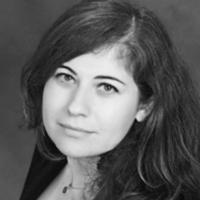

tatyana elleseff

Tatyana Elleseff, MA, CCC-SLP

Tatyana Elleseff, MA, CCC-SLP is a bilingual speech-language pathologist who specializes in working with multicultural, internationally and domestically adopted as well as at-risk children with complex communication disorders in both hospital and private practice settings. She has presented for a number of medical, academic and non-profit organizations as well as speech language associations. She has been published in several journals and magazines including Advance for Speech Pathologists as well as ASHA Perspectives on School Based and Global Issues.


Related Courses

Phast Phonemic Awareness Phun
Presented by Angie Neal, MS, CCC-SLP
Video
Course: #10101Level: Intermediate0.5 Hours
The critical importance of phonemic awareness, especially for children with a history of speech and/or language delays, is discussed in this Fast Class. A variety of assessment and intervention activities to improve phonemic awareness are described.

Culturally Responsive Assessment for African American English-Speaking Students
Presented by Megan-Brette Hamilton, PhD, CCC-SLP
Video
Course: #9949Level: Introductory1.5 Hours
This course provides clinicians with culturally responsive assessment strategies to help determine whether an AAE-speaking student presents with a speech and/or language disorder. Beginning with a brief exploration of cultural humility, this course discusses how clinicians can become more culturally competent when assessing AAE-speaking students.

Yoga and Speech Therapy: How to Bring Yoga into Your Pediatric Sessions
Presented by Jessi Andricks, MS, CCC-SLP
Video
Course: #10478Level: Introductory1 Hour
Yoga isn't just for adults in the studio! What yoga for children entails, and how and why to incorporate it into speech therapy, are described in this course. Discussion includes the ways in which yoga can help children feel more connected to their goals and work, find calm in the sessions, and have a more holistic and mindful experience.

Dyslexia and Developmental Language Disorder: School-Based Screenings, Assessments, Interventions, and Implementation Science
Presented by Tiffany Hogan, PhD, CCC-SLP, FASHA
Video
Course: #11016Level: Intermediate1 Hour
Developmental language disorder (DLD) – a neurodiversity that occurs in 10% of the population and that makes learning vocabulary and grammar difficult - is the most commonly co-occurring learning disability associated with dyslexia, a word reading difficulty. DLD and dyslexia are described in this course with a focus on how they are the same and different. Actionable, practice solutions for improving educational outcomes for those with DLD and dyslexia through response to intervention and implementation science are discussed.

Reading Comprehension and the SLP: Foundational Understanding
Presented by Angie Neal, MS, CCC-SLP
Audio
Course: #10763Level: Intermediate1 Hour
This is Part 1 of a two-part series. This course provides SLPs with foundational knowledge needed to directly address and collaboratively support reading comprehension across all grade levels. Models of language and reading comprehension, comprehension processes vs. products, instruction in comprehension skills vs. strategies, factors in reading comprehension difficulties, and connections to general education are discussed.