Question
What can be done to help adults with auditory processing problems? I have read about so many programs (Samonas, The Listening Program, ect.) that I am not sure which one is valid. I would appreciate any information you could send me.
Answer
Both the Samonas program and The Listening Program are directed at improving "active listening skills" which is not the basis behind a person having an auditory processing disorder. The evaluating audiologist who determined that an auditory processing disorder exists would be able to best provide treatment suggestions, as these would be dependent on the person's deficit profile (all people with an auditory processing disorder do not exhibit deficits in the same areas, and therefore one program does NOT fit all needs).
I would also refer you to When the Brain Can't Hear (2002), a book by Terri Bellis, who is a researcher and audiologist who did not have an auditory processing disorder herself until adulthood. Several excellent suggestions are provided in that book, that can be more "fine-tuned" to the actual deficits in the APD profile you would want to improve.
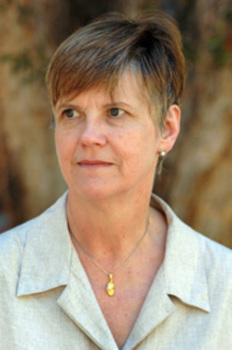
Martha Coen Cummings, Ph.D. CCC is the Coordinator of Speech Pathology Services at Cincinnati Children's Hospital Medical Center, Mason Outpatient satellite. She focuses on research and treatment of children with disorders of auditory processing and voice. She is a former President and Chairperson of numerous committees for the following professional associations: the Ohio Speech-Language and Hearing Association, Northern Kentucky Speech-Language *Hearing Association, and the Southwestern Ohio Speech-Language-Hearing Association. Martha has previously presented numerous workshops and full-day presentations on central auditory processing disorders, metalinguistic therapy, and voice assessment/therapy at the local, state, national, and international levels.
Martha Coen Cummings, Ph.D,CCC
Related Courses
1https://www.speechpathology.com/slp-ceus/course/20q-continuum-approach-for-sorting-1000820Q: A Continuum Approach for Sorting Out Processing DisordersThere is a good deal of confusion among audiologists and speech-language pathologists when a diagnosis of “processing disorder” is introduced. This course presents a continuum model to differentiate processing disorders into acoustic, phonemic, or linguistic aspects so that assessment and treatment can become more focused and effective. The roles of audiologists and SLPs in relation to processing disorders are described, and compensatory strategies for differing aspects of processing are presented.textual, visual129USDSubscriptionUnlimited COURSE Access for $129/yearOnlineOnlySpeechPathology.comwww.speechpathology.com20Q: A Continuum Approach for Sorting Out Processing DisordersThere is a good deal of confusion among audiologists and speech-language pathologists when a diagnosis of “processing disorder” is introduced. This course presents a continuum model to differentiate processing disorders into acoustic, phonemic, or linguistic aspects so that assessment and treatment can become more focused and effective. The roles of audiologists and SLPs in relation to processing disorders are described, and compensatory strategies for differing aspects of processing are presented.10008OnlinePT60M
There is a good deal of confusion among audiologists and speech-language pathologists when a diagnosis of “processing disorder” is introduced. This course presents a continuum model to differentiate processing disorders into acoustic, phonemic, or linguistic aspects so that assessment and treatment can become more focused and effective. The roles of audiologists and SLPs in relation to processing disorders are described, and compensatory strategies for differing aspects of processing are presented.
2https://www.speechpathology.com/slp-ceus/course/auditory-processing-disorder-overview-assessment-10538Auditory Processing Disorder: Overview of Assessment and Management for School-based ProfessionalsAn overview of auditory processing disorder (APD) specific to school-age children in classroom settings is provided in this course. Red flags, referrals and diagnosis, and different types of supports and practical interventions are discussed.auditory, textual, visual129USDSubscriptionUnlimited COURSE Access for $129/yearOnlineOnlySpeechPathology.comwww.speechpathology.comAuditory Processing Disorder: Overview of Assessment and Management for School-based ProfessionalsAn overview of auditory processing disorder (APD) specific to school-age children in classroom settings is provided in this course. Red flags, referrals and diagnosis, and different types of supports and practical interventions are discussed.10538OnlinePT60M
An overview of auditory processing disorder (APD) specific to school-age children in classroom settings is provided in this course. Red flags, referrals and diagnosis, and different types of supports and practical interventions are discussed.
3https://www.speechpathology.com/slp-ceus/course/mild-tbi-not-so-effects-10794Mild TBI - The Not So Mild EffectsAn overview of mild traumatic brain injury (mTBI)/concussion and its pathophysiology, with particular emphasis on diagnostic and rehabilitation tools utilized by SLPs and audiologists, is provided in this course. Impacts of mTBI on hearing, cognition, vision and the vestibular system, assessments performed by the two disciplines post-concussion, and treatments for cognition (including auditory processing disorder) are described.auditory, textual, visual129USDSubscriptionUnlimited COURSE Access for $129/yearOnlineOnlySpeechPathology.comwww.speechpathology.comMild TBI - The Not So Mild EffectsAn overview of mild traumatic brain injury (mTBI)/concussion and its pathophysiology, with particular emphasis on diagnostic and rehabilitation tools utilized by SLPs and audiologists, is provided in this course. Impacts of mTBI on hearing, cognition, vision and the vestibular system, assessments performed by the two disciplines post-concussion, and treatments for cognition (including auditory processing disorder) are described.10794OnlinePT90M
'I enjoyed the course, but it was very detailed with regard to audiology interventions and I am an SLP, so perhaps not as relevant in daily practice'Read Reviews
An overview of mild traumatic brain injury (mTBI)/concussion and its pathophysiology, with particular emphasis on diagnostic and rehabilitation tools utilized by SLPs and audiologists, is provided in this course. Impacts of mTBI on hearing, cognition, vision and the vestibular system, assessments performed by the two disciplines post-concussion, and treatments for cognition (including auditory processing disorder) are described.
4https://www.speechpathology.com/slp-ceus/course/back-to-basics-practical-aspects-9294Back to Basics: Practical Aspects of Auditory Processing DisordersThis course will provide an overview of assessment and management of auditory processing disorders (APD) in children. Interdisciplinary aspects of working with school-age children will be highlighted.auditory, textual, visual129USDSubscriptionUnlimited COURSE Access for $129/yearOnlineOnlySpeechPathology.comwww.speechpathology.comBack to Basics: Practical Aspects of Auditory Processing DisordersThis course will provide an overview of assessment and management of auditory processing disorders (APD) in children. Interdisciplinary aspects of working with school-age children will be highlighted.9294OnlinePT60M
This course will provide an overview of assessment and management of auditory processing disorders (APD) in children. Interdisciplinary aspects of working with school-age children will be highlighted.
5https://www.speechpathology.com/slp-ceus/course/20q-auditory-processing-what-you-1033420Q: Auditory Processing - What You Always Wanted to KnowBehaviors and developmental/educational impacts associated with auditory processing disorder (APD) are described in this course. Methods and tools for identifying APD, including a list of tests for assessment, as well as treatment strategies for APD are discussed.textual, visual129USDSubscriptionUnlimited COURSE Access for $129/yearOnlineOnlySpeechPathology.comwww.speechpathology.com20Q: Auditory Processing - What You Always Wanted to KnowBehaviors and developmental/educational impacts associated with auditory processing disorder (APD) are described in this course. Methods and tools for identifying APD, including a list of tests for assessment, as well as treatment strategies for APD are discussed.10334OnlinePT90M
Behaviors and developmental/educational impacts associated with auditory processing disorder (APD) are described in this course. Methods and tools for identifying APD, including a list of tests for assessment, as well as treatment strategies for APD are discussed.