
iSpeechPathology.com – Call us: 800-242-5183
SLP, SLPA, CF Apply Now! PTS Inc.

ICD-9 Codes and CPT Codes

Rebecca Jarzynski, MS, CCC-SLP

January 5, 2015

Question

What is the difference between ICD-9 and CPT codes?

Answer

The difference between ICD-9 and CPT codes is that ICD-9 codes are used to describe the problem or the reason for the procedure.  An example of an ICD-9 code is 315.35 which is a “childhood onset fluency disorder.”  We are essentially describing the diagnosis, or the reason the person is coming to you. 

That is different than a CPT code.  A CPT code describes the treatment that was actually performed.  This is the procedure code.  It is what we actually did in our treatment session.  A frequently used CPT code is 92507, which is the “treatment of speech, language, voice, communication, and/or auditory processing disorder, individual.”  

How are these used in private practice?  When you bill an insurance company, you will either be completing a 1500 form, which is actually a paper form that you fill in, or you will be completing electronic billing - you will go to a website and enter the information there.  It does not matter whether you are doing the paper-based form or if you are submitting an electronic bill; the information that you need is the same.  When you are doing that billing, you are going to be reporting both ICD-9 codes and CPT codes on every bill.  These two codes have to make sense together.  You cannot have an ICD-9 code that is a childhood onset fluency disorder and then have a CPT code that says that you worked on swallowing with any individual.  That would not make sense to an insurance company and you will be denied because of that.  That is the most important thing to remember; these ICD-9 codes and CPT codes have to go together.  

Becca Jarzynski, MS, CCC-SLP, received her Master of Science Degree in Communication Disorders from the University of Wisconsin – Eau Claire in 2000. She has also earned a Graduate Certificate in Behavioral Intervention for Children with Autism through the University of Massachusetts – Lowell, and completed a year as a preparing mentor in family –centered care with the Wisconsin Birth-to-Three program.  Becca has worked as a pediatric speech-language pathologist for fourteen years and currently owns a private practice, Child Talk Speech Therapy, L.L.C., in Eau Claire, Wisconsin.
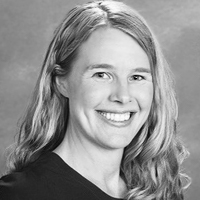

rebecca jarzynski

Rebecca Jarzynski, MS, CCC-SLP

Becca Jarzynski, MS, CCC-SLP, received her Master of Science Degree in Communication Disorders from the University of Wisconsin – Eau Claire in 2000. She has also earned a Graduate Certificate in Behavioral Intervention for Children with Autism through the University of Massachusetts – Lowell, and completed a year as a preparing mentor in family –centered care with the Wisconsin Birth-to-Three program.  Becca has worked as a pediatric speech-language pathologist for fourteen years and currently owns a private practice, Child Talk Speech Therapy, L.L.C., in Eau Claire, Wisconsin. She also works as a clinical instructor at the University of Wisconsin – Eau Claire, where she provides clinical supervision to graduate and undergraduate students and teaches a variety of courses, including Normal Communication Development, Clinical Procedures, and Facilitating Communication in Preschool Students.


Related Courses

The Pitfalls Of EMR: How To Make It Work For You And Your Patients
Presented by John M. Delossantos, OTR/L, MBA, RAC-CT, CFPS, R-RAM
Video

Presenter

John M. Delossantos, OTR/L, MBA, RAC-CT, CFPS, R-RAM
Course: #1033873Level: Intermediate2 Hours
  'This course was excellent because it clearly explained essential Medicare regulations and documentation requirements, using practical examples to highlight common pitfalls'   Read Reviews
Use of the electronic medical record (EMR) for therapy documentation and the documentation review process conducted by payers are discussed in this course. Methods for effectively demonstrating skilled services and medical necessity and tips for avoiding pitfalls that can result in reviews or reimbursement denials are described. Actual before and after documentation samples are presented.

Interpreting Standardized Tests Incorporating Culturally Responsive Practice
Presented by Carolyn (Carney) Sotto, PhD, CCC-SLP, ASHA Fellow
Video

Presenter

Carolyn (Carney) Sotto, PhD, CCC-SLP, ASHA Fellow
Course: #9953Level: Introductory1 Hour
  'So far one of my best CEU's'   Read Reviews
This course discusses fundamental concepts of descriptive statistics that SLPs, as informed consumers, must understand in order to interpret and summarize the results of norm-referenced, standardized assessment tools. In addition, cultural variables that can impact SLP assessments are identified.

20Q: Infection Control Strategies for SLPs
Presented by A.U. Bankaitis Smith, PhD
Text

Presenter

A.U. Bankaitis Smith, PhD
Course: #9729Level: Intermediate1 Hour
  'This course was informative and useful to me, as I work with young children in a school setting'   Read Reviews
Speech-language pathologists are expected by policy authorities to apply appropriate measures to protect patients, co-workers and themselves in clinical situations that may expose individuals to infectious microbes. This article provides practical guidelines for implementing infection control principles within the context of the COVID-19 pandemic, including discussion of personal protective equipment (PPE) and disinfecting and cleaning products.

Understanding Mental Health in Older Adults
Presented by Gabrielle Juliano-Villani, LCSW
Video

Presenter

Gabrielle Juliano-Villani, LCSW
Course: #10246Level: Introductory1 Hour
  'Good overview on aging issues'   Read Reviews
Mental health issues concerning older adults are discussed in this course. Topics include the intersection between mental and physical health, symptoms of common mental health disorders in this population, and referral criteria.

Rebuilding the Bridge: Post-Pandemic Mentorship for Future SLPs
Presented by Amber B. Heape, CScD, CCC-SLP, FNAP
Video

Presenter

Amber B. Heape, CScD, CCC-SLP, FNAP
Course: #11278Level: Intermediate1 Hour
  'This course is extremely applicable to a situation I am working through with a co-worker who finished her CF in 2021'   Read Reviews
The COVID-19 pandemic disrupted traditional clinical training pathways, leaving many Clinical Fellows and graduate students entering the field with unique challenges and gaps in experience. This course discusses equipping seasoned SLPs with practical, evidence-based strategies to mentor, support, and empower the next generation of clinicians. The course explores real-world scenarios and actionable tools to rebuild confidence, competence, and connection in a post-pandemic professional landscape.