
iSpeechPathology.com – Call us: 800-242-5183
eLuma - Students Need You - September 2025

Exercises for Improving Jaw Stability with Dental Malocclusion

Pamela Terrell, Ph.D,CCC-SLP

October 19, 2009

Share:

Question

I am currently working with a number of children with Down Syndrome who demonstrate Class III malocclusion and many phonological/articulation errors paired with jaw sliding and lack of tongue/jaw differentiation. I am well versed in the lack of efficacy

Answer

My theoretical viewpoint is that speech and language must always be communicative and functional with all clients, but particularly with children. Therefore, I would not recommend engaging in any type of speech or drill-type exercises at the phoneme or nonsense syllable level. Those simply aren't communicative and therefore, not socially reinforcing. While you would likely get some jaw stabilization with a bite block you may create some additional problems, such as abnormal tongue carriage. Furthermore, the many discrete steps in generalization of the phoneme to co-articulated speech, then going through all the steps again without the bite blocks, and then again generalizing to other contexts are not very efficient. A quick and cursory literature search demonstrated very little mention of bite blocks in the journals past the late 1980s and early 1990s. As far as myofunctional exercises, ASHA's viewpoint is that one must have the training and skills necessary to implement successful myofunctional therapy (www.asha.org/docs/html/PS1991-00103.html.) If you elect to go this route, I would encourage collaboration with the student's dentist regarding anatomical constraints and possible contraindications due to the Class III malocclusion.

Instead I would recommend therapy focused on using the target phonemes in a functional manner while incorporating multi-modality cues such as gestures, phonemic placement, Visual Phonics cue, Phonic Faces cards, etc. You did not mention what the specific speech sound errors were, but for the purpose of example, let's suppose the error is /k/. I would set up an interactive activity such as "baking a carrot cake" in which the target words were "bake, cake, cook, carrot, cool, etc." I would model, recast, offer two choices, etc. all while using multi-modality cues any time /k/ was produced. Additionally, since you mentioned that some of the errors were phonological in nature, I would recommend using minimal pairs as a means of elucidating the phonological differences in the phonemes. Minimal pairs can also be incorporated into play. Finally, you could cue the student to open the mouth a little wider than usual for production of target phonemes in words and to use the tongue to make the sounds, not the jaw. Mirror feedback may be helpful. Remember that the goal is increased intelligibility too. The articulation may not be particularly smooth or "pretty" (with extraneous jaw movement present), but if the end result is improved intelligibility then progress has been made.

Pamela Terrell, Ph.D., CCC-SLP is an assistant professor at the University of Wisconsin-Stevens Point. Her areas of clinical and research interest are child language disorders, literacy, and cleft palate/craniofacial disorders.
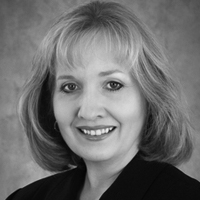

pamela terrell

Pamela Terrell, Ph.D,CCC-SLP


Related Courses

20Q: Dynamics of School-Based Speech and Language Therapy Variables
Presented by Kelly Farquharson, PhD, CCC-SLP, Anne Reed, MS, CCC-SLP
Text

Presenters

Kelly Farquharson, PhD, CCC-SLPAnne Reed, MS, CCC-SLP
Course: #10002Level: Advanced1 Hour
  'I really appreciate the examples and the data'   Read Reviews
This course reviews dynamics of speech and language therapy variables such as session frequency, intervention intensity, and dosage, and how these are impacted by different service delivery models. It discusses how therapy outcomes are related to therapy quality, IEP goals, and SLP-level variables such as job satisfaction and caseload size.

Sleuthing for /s/ and /r/: Facilitating Strategies for Residual Sound Errors
Presented by Lynn Berk, MA, CCC-SLP
Video

Presenter

Lynn Berk, MA, CCC-SLP
Course: #9237Level: Introductory2 Hours
  'I got a few ideas for working on these sounds in therapy'   Read Reviews
This course will discuss the rationale and strategies for teaching production of /s/ and /r/ for upper elementary school-age children and older. Errors on these two sounds are considered residual when production continues to be inaccurate beyond the developmental age of acquisition.

20Q: A Continuum Approach for Sorting Out Processing Disorders
Presented by Gail J. Richard, PhD, CCC-SLP
Text

Presenter

Gail J. Richard, PhD, CCC-SLP
Course: #10008Level: Intermediate1 Hour
  'Very informative'   Read Reviews
There is a good deal of confusion among audiologists and speech-language pathologists when a diagnosis of “processing disorder” is introduced. This course presents a continuum model to differentiate processing disorders into acoustic, phonemic, or linguistic aspects so that assessment and treatment can become more focused and effective. The roles of audiologists and SLPs in relation to processing disorders are described, and compensatory strategies for differing aspects of processing are presented.

20Q: Evaluation and Treatment of Speech/Resonance Disorders and Velopharyngeal Dysfunction
Presented by Ann W. Kummer, PhD, CCC-SLP
Text

Presenter

Ann W. Kummer, PhD, CCC-SLP
Course: #8729Level: Intermediate1 Hour
  'Great explations of the different velopharyngeal problems'   Read Reviews
Children with speech and resonance disorders (hypernasality, hyponasality, and cul-de-sac resonance) and/or nasal emission present challenges for speech-language pathologists (SLPs) in all settings. This article will help participants to recognize resonance disorders and the characteristics of velopharyngeal dysfunction, and provide appropriate management.

/R/: What You Want to Know RIGHT NOW
Presented by Angie Neal, MS, CCC-SLP
Video

Presenter

Angie Neal, MS, CCC-SLP
Course: #10018Level: Introductory0.5 Hours
  'Great fun practical r strategies all in a short course'   Read Reviews
This 30-minute Fast Class describes the most important method for eliciting /r/, discusses the fastest way to generalize /r/ and achieve automaticity, and explores several troubleshooting strategies. While there is much more to know about /r/, this is the “quick and dirty" version to achieve success.