
iSpeechPathology.com – Call us: 800-242-5183
eLuma - Students Need You - September 2025

Authentic Classroom Resources

Ashley S. Garber, M.S., CCC-SLP, LSLS Cert AVT

April 15, 2013

Share:

Question

What are authentic classroom resouces as they pertain to practicing listening skills?  Can you provide an example of what they might look like?


Answer

With the word ‘authentic’ I am mostly thinking about the fact that the classroom environment is a place where learning is happening in an integrated way.  Hopefully the one-on-one therapy session can be negotiated in that way as well.  I know it is something that I certainly work to focus on in my therapy session that as many activities as I can do that involve role-playing and social language. My therapy session is going to be more structured than the classroom environment might be, but I will work as much as I can to make games and activities that I do in that pull-out session, as natural as I can by including social language, etc. The authentic learning environment offered in the classroom means that social language is occurring.  The idea that learning next to other people and learning in real time is happening in the classroom, and that is an authentic learning environment.  

Ashley S. Garber, M.S., CCC-SLP, LSLS Cert AVT owns Listening and Language Connections, a private practice in Ann Arbor Michigan providing auditory verbal therapy services, LSLS mentoring and consulting. Her 15 years in the field include posts at the University of Michigan Cochlear Implant Program, the Vanderbilt Bill Wilkerson Center and privately in Venezuela. She is also an educational consultant for Cochlear Americas.
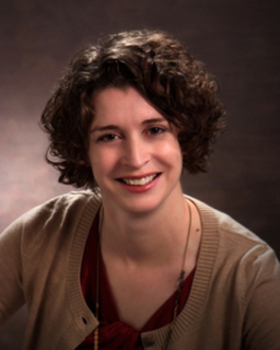


ashley s garber

Ashley S. Garber, M.S., CCC-SLP, LSLS Cert AVT

Ashley S. Garber, M.S., CCC-SLP, LSLS Cert AVT owns Listening and Language Connections, a private practice in Ann Arbor Michigan providing auditory verbal therapy services, LSLS mentoring and consulting. Her 15 years in the field include posts at the University of Michigan Cochlear Implant Program, the Vanderbilt Bill Wilkerson Center and privately in Venezuela. She is also an educational consultant for Cochlear Americas.


Related Courses

20Q: Dynamics of School-Based Speech and Language Therapy Variables
Presented by Kelly Farquharson, PhD, CCC-SLP, Anne Reed, MS, CCC-SLP
Text

Presenters

Kelly Farquharson, PhD, CCC-SLPAnne Reed, MS, CCC-SLP
Course: #10002Level: Advanced1 Hour
  'I really appreciate the examples and the data'   Read Reviews
This course reviews dynamics of speech and language therapy variables such as session frequency, intervention intensity, and dosage, and how these are impacted by different service delivery models. It discusses how therapy outcomes are related to therapy quality, IEP goals, and SLP-level variables such as job satisfaction and caseload size.

Sleuthing for /s/ and /r/: Facilitating Strategies for Residual Sound Errors
Presented by Lynn Berk, MA, CCC-SLP
Video

Presenter

Lynn Berk, MA, CCC-SLP
Course: #9237Level: Introductory2 Hours
  'I got a few ideas for working on these sounds in therapy'   Read Reviews
This course will discuss the rationale and strategies for teaching production of /s/ and /r/ for upper elementary school-age children and older. Errors on these two sounds are considered residual when production continues to be inaccurate beyond the developmental age of acquisition.

20Q: A Continuum Approach for Sorting Out Processing Disorders
Presented by Gail J. Richard, PhD, CCC-SLP
Text

Presenter

Gail J. Richard, PhD, CCC-SLP
Course: #10008Level: Intermediate1 Hour
  'Very informative'   Read Reviews
There is a good deal of confusion among audiologists and speech-language pathologists when a diagnosis of “processing disorder” is introduced. This course presents a continuum model to differentiate processing disorders into acoustic, phonemic, or linguistic aspects so that assessment and treatment can become more focused and effective. The roles of audiologists and SLPs in relation to processing disorders are described, and compensatory strategies for differing aspects of processing are presented.

20Q: Evaluation and Treatment of Speech/Resonance Disorders and Velopharyngeal Dysfunction
Presented by Ann W. Kummer, PhD, CCC-SLP
Text

Presenter

Ann W. Kummer, PhD, CCC-SLP
Course: #8729Level: Intermediate1 Hour
  'Great explations of the different velopharyngeal problems'   Read Reviews
Children with speech and resonance disorders (hypernasality, hyponasality, and cul-de-sac resonance) and/or nasal emission present challenges for speech-language pathologists (SLPs) in all settings. This article will help participants to recognize resonance disorders and the characteristics of velopharyngeal dysfunction, and provide appropriate management.

/R/: What You Want to Know RIGHT NOW
Presented by Angie Neal, MS, CCC-SLP
Video

Presenter

Angie Neal, MS, CCC-SLP
Course: #10018Level: Introductory0.5 Hours
  'Great fun practical r strategies all in a short course'   Read Reviews
This 30-minute Fast Class describes the most important method for eliciting /r/, discusses the fastest way to generalize /r/ and achieve automaticity, and explores several troubleshooting strategies. While there is much more to know about /r/, this is the “quick and dirty" version to achieve success.