
iSpeechPathology.com – Call us: 800-242-5183
Austill's Educational Therapy Services - Potential - November 2025

Articulation Differences that Reduce Intelligibility

Alejandro Brice, Ph.D,CCC-SLP

February 9, 2009

Share:

Question

Several of my students have articulation differences that are common to their culture. However, not having the sounds makes the student difficult to understand in English. I see a couple of Spanish-speaking children who are hard to understand. They are

Answer

The American Speech-Language-Hearing Association states that no dialect may be viewed or treated as a disorder. If the students are having difficulties with sounds which are normal language interference errors, then the SLP must not directly address that child's articulation, i.e., provide therapy. Articulation differences are not disorders. It is expected that all second language learners will experience some articulation errors that may take 2-3 years to correctly say (what Cummins refers to as "oral language" or Basic Interpersonal Communication Skills). A student with an articulation disorder will distort sounds and make sound errors that most second language learners say correctly.

The sounds of "th", "sh, and "j" do not occur in Spanish. It is normal for a Spanish speaking child not to have these sounds in his/her repertoire. The "sh" sound may inadvertently be misarticulated in the final position of syllables or words. Spanish does not contain as many single syllable words as English. In addition, Spanish only allows for final sounds to consist of /r,s,n,d,l/ and vowels. From what you have described these are normal ifferences. Please remember that learning a second language takes time. Children with normally developing articulation skills will acquire these sounds in English. In sum, you may provide suggestions, but it seems that this is the ESL/ESOL teacher's responsibility.

Dr. Alejandro Brice is an international presenter and nationally recognized expert in bilingual speech and language issues. He has 96 publications and has presented 128 papers in China, Finland, Australia, Japan, South Africa, and at numerous national and state conferences. His research has focused on issues of transference or interference between two languages in the areas of phonetics, phonology, semantics, and pragmatics related to speech-language pathology. His clinical expertise relates to the appropriate assessment and treatment of Spanish-English speaking students and clients.
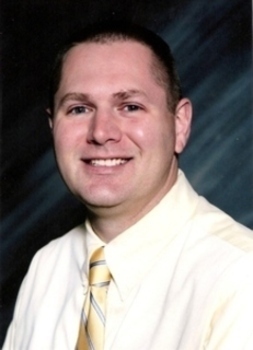

alejandro brice

Alejandro Brice, Ph.D,CCC-SLP


Related Courses

20Q: Dynamics of School-Based Speech and Language Therapy Variables
Presented by Kelly Farquharson, PhD, CCC-SLP, Anne Reed, MS, CCC-SLP
Text

Presenters

Kelly Farquharson, PhD, CCC-SLPAnne Reed, MS, CCC-SLP
Course: #10002Level: Advanced1 Hour
  'I really appreciate the examples and the data'   Read Reviews
This course reviews dynamics of speech and language therapy variables such as session frequency, intervention intensity, and dosage, and how these are impacted by different service delivery models. It discusses how therapy outcomes are related to therapy quality, IEP goals, and SLP-level variables such as job satisfaction and caseload size.

Sleuthing for /s/ and /r/: Facilitating Strategies for Residual Sound Errors
Presented by Lynn Berk, MA, CCC-SLP
Video

Presenter

Lynn Berk, MA, CCC-SLP
Course: #9237Level: Introductory2 Hours
  'I got a few ideas for working on these sounds in therapy'   Read Reviews
This course will discuss the rationale and strategies for teaching production of /s/ and /r/ for upper elementary school-age children and older. Errors on these two sounds are considered residual when production continues to be inaccurate beyond the developmental age of acquisition.

20Q: A Continuum Approach for Sorting Out Processing Disorders
Presented by Gail J. Richard, PhD, CCC-SLP
Text

Presenter

Gail J. Richard, PhD, CCC-SLP
Course: #10008Level: Intermediate1 Hour
  'Very informative'   Read Reviews
There is a good deal of confusion among audiologists and speech-language pathologists when a diagnosis of “processing disorder” is introduced. This course presents a continuum model to differentiate processing disorders into acoustic, phonemic, or linguistic aspects so that assessment and treatment can become more focused and effective. The roles of audiologists and SLPs in relation to processing disorders are described, and compensatory strategies for differing aspects of processing are presented.

20Q: Evaluation and Treatment of Speech/Resonance Disorders and Velopharyngeal Dysfunction
Presented by Ann W. Kummer, PhD, CCC-SLP
Text

Presenter

Ann W. Kummer, PhD, CCC-SLP
Course: #8729Level: Intermediate1 Hour
  'Great explations of the different velopharyngeal problems'   Read Reviews
Children with speech and resonance disorders (hypernasality, hyponasality, and cul-de-sac resonance) and/or nasal emission present challenges for speech-language pathologists (SLPs) in all settings. This article will help participants to recognize resonance disorders and the characteristics of velopharyngeal dysfunction, and provide appropriate management.

/R/: What You Want to Know RIGHT NOW
Presented by Angie Neal, MS, CCC-SLP
Video

Presenter

Angie Neal, MS, CCC-SLP
Course: #10018Level: Introductory0.5 Hours
  'Great fun practical r strategies all in a short course'   Read Reviews
This 30-minute Fast Class describes the most important method for eliciting /r/, discusses the fastest way to generalize /r/ and achieve automaticity, and explores several troubleshooting strategies. While there is much more to know about /r/, this is the “quick and dirty" version to achieve success.