
University of Minnesota-Duluth
Department of Communicative Sciences and Disorders
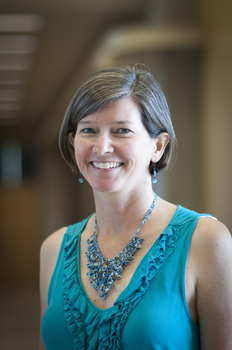
Amy E. Skinder-Meredith
229 Bohannon Hall, 1207 Ordean Ct.
Duluth, MN 55812
Abstract:
This single-subject pilot study was conducted to investigate the effectiveness of an oral motor exerciser (Iso-flex) using an A-B-A design. A seven-year, eleven-month-old female with persistent /r/ and /s/ articulation errors and tongue thrust served as the subject. The child participated in speech therapy for 16 sessions over eight weeks. The pre-vocalic and vocalic /r/ were treated with traditional articulation drill therapy (TADT) throughout the course of treatment, while /s/ received only the oral motor exercise (Iso-flex) treatment, which was introduced during the third session and withdrawn following the twelfth session. Probe data was taken on all sounds in words and sentences at the end of each session to monitor progress with and without the Iso-flex.
Data trends were analyzed using visual analysis and an Ordinary Least Squares Regression with a time indicator. Visual analysis of the pre-vocalic and vocalic /r/ probe data did not show a clear effect from implementation of the Iso-flex, but the regression analysis showed the device had a significant effect on accuracy of /r/ when used with TADT. There was no significant effect regarding accuracy of /s/.
Introduction:
The purpose of this single subject pilot study was to test the effectiveness of an oral-motor device (Iso-flex) when used with and without traditional articulation therapy (TADT) in the treatment of a child with a phonologic/articulation disorder (PAD). The use of oral motor exercises in the treatment of speech disorders has been the subject of much controversy (Clark, 2003; Forrest, 2002; Hodge, 2002). Although there are many oral-motor devices on the market, there is little research to show they are efficacious (Christenson & Hanson, 1981; Fields & Polmanteer, 2002; Ray, 2003). Furthermore, there is substantial research on speech physiology, strengthening, and motor learning principles that counter-indicate, or question the use of non-speech oral exercises for improving articulatory performance (Campbell, Barlow, & Moore, 2000; Clark, 2003; Forrest, 2002; Hodge, 2002).
Several studies have examined the efficacy of oral-myofunctional therapy for tongue thrust and correction of distorted /s/ (Christenson & Hanson, 1981; Gommerman & Hodge, 1995; Overstake, as cited in Forrest, 2002). Interestingly, one study showed motor speech tasks generalized to improved accuracy of speech (Overstake, as cited in Forrest, 2002), yet others found only the task trained improved (Christenson & Hanson, 1981; Gommerman & Hodge, 1995). Fields and Polmanteer (2002) examined the effects of oral motor therapy in addition to TADT versus TADT alone. They found the group that received both types of therapy had fewer articulation errors following the study, when compared to the group who only received TADT.
Results such as these (above) suggest further investigation into the use of oral motor exercises is warranted. Unfortunately, there is a lack of foundation-based information needed to judge the theoretical soundness of these types of treatment strategies (Clark, 2003). For example, the rationale for targeting strength of an articulator to improve articulation is wrought with controversy. As Forrest (2002) pointed out, the use of oral-motor exercise to increase articulator strength needs to be questioned since we do not have evidence that children with PADs have a deficit in strength. Furthermore, data suggested that only 10% to 20% of the maximum force of lip movement; 20% of maximum force of tongue strength; and 11% to 15% of jaw strength is needed for speech (Forrest, 2002; Loff, 2004; Love, 2000).
Effect of an Oral Motor Exerciser in Articulation Therapy: A Single Subject Design
November 15, 2004
Related Courses
1
https://www.speechpathology.com/slp-ceus/course/textbook-here-s-to-treat-10674
Textbook: Here’s How to Treat Childhood Apraxia of Speech: 3rd Edition
Based on the textbook Here’s How to Treat Childhood Apraxia of Speech (CAS): Third Edition, this course discusses the most current research regarding the nature of CAS, best practices in evaluation, and effective treatment approaches, along with considerations related to motor learning and co-occurring challenges. It provides a holistic overview of the complex needs of children with CAS at various stages of development.
textual, visual
129
USD
Subscription
Unlimited COURSE Access for $129/year
OnlineOnly
SpeechPathology.com
www.speechpathology.com
Textbook: Here’s How to Treat Childhood Apraxia of Speech: 3rd Edition
Based on the textbook Here’s How to Treat Childhood Apraxia of Speech (CAS): Third Edition, this course discusses the most current research regarding the nature of CAS, best practices in evaluation, and effective treatment approaches, along with considerations related to motor learning and co-occurring challenges. It provides a holistic overview of the complex needs of children with CAS at various stages of development.
10674
Online
PT1470M
Textbook: Here’s How to Treat Childhood Apraxia of Speech: 3rd Edition
Presented by Margaret Fish, MS, CCC-SLP, Amy Skinder-Meredith, PhD, CCC-SLP
Course: #10674Level: Advanced24.5 Hours
ASHA/2.45 Advanced, Professional; Calif SLPAB/24.5; IACET/2.5; Kansas LTS-S1370/24.5; SAC/24.5
Based on the textbook Here’s How to Treat Childhood Apraxia of Speech (CAS): Third Edition, this course discusses the most current research regarding the nature of CAS, best practices in evaluation, and effective treatment approaches, along with considerations related to motor learning and co-occurring challenges. It provides a holistic overview of the complex needs of children with CAS at various stages of development.
2
https://www.speechpathology.com/slp-ceus/course/20q-using-speech-science-in-10326
20Q: Using Speech Science in Clinical Practice
Many speech-language pathology clinicians find speech science daunting and not applicable to their clinical practice. This course discusses why and how speech science is useful in understanding speech disorders and differences. Examples are provided of how to assess and treat speech disorders using speech science-based principles and techniques such as the source-filter theory and acoustic, physiologic and biofeedback measures.
textual, visual
129
USD
Subscription
Unlimited COURSE Access for $129/year
OnlineOnly
SpeechPathology.com
www.speechpathology.com
20Q: Using Speech Science in Clinical Practice
Many speech-language pathology clinicians find speech science daunting and not applicable to their clinical practice. This course discusses why and how speech science is useful in understanding speech disorders and differences. Examples are provided of how to assess and treat speech disorders using speech science-based principles and techniques such as the source-filter theory and acoustic, physiologic and biofeedback measures.
10326
Online
PT60M
20Q: Using Speech Science in Clinical Practice
Presented by Amy T. Neel, PhD, CCC-SLP
Course: #10326Level: Intermediate1 Hour
AG Bell - LSLS/1.0 Domain 1, Domain 2, Domain 3, Domain 7; ASHA/0.1 Intermediate, Professional; Calif SLPAB/1.0; IACET/0.1; Kansas LTS-S1370/1.0; SAC/1.0
Many speech-language pathology clinicians find speech science daunting and not applicable to their clinical practice. This course discusses why and how speech science is useful in understanding speech disorders and differences. Examples are provided of how to assess and treat speech disorders using speech science-based principles and techniques such as the source-filter theory and acoustic, physiologic and biofeedback measures.
3
https://www.speechpathology.com/slp-ceus/course/motor-planning-impact-on-communication-10222
Motor Planning: The Impact on Communication and Beyond
Master skills to implement in your practice immediately with continued Master Class. This four-hour course describes the components of motor planning and the areas of impact. Assessment, strategies for supporting clients with motor planning challenges, and tips for discussing praxis with caregivers are also addressed.
auditory, textual, visual
129
USD
Subscription
Unlimited COURSE Access for $129/year
OnlineOnly
SpeechPathology.com
www.speechpathology.com
Motor Planning: The Impact on Communication and Beyond
Master skills to implement in your practice immediately with continued Master Class. This four-hour course describes the components of motor planning and the areas of impact. Assessment, strategies for supporting clients with motor planning challenges, and tips for discussing praxis with caregivers are also addressed.
10222
Online
PT240M
Motor Planning: The Impact on Communication and Beyond
Presented by Joleen R. Fernald, PhD, CCC-SLP, BCS-CL, Lyn Bennett, OTR/L
Course: #10222Level: Intermediate4 Hours
ASHA/0.4 Intermediate, Professional; Calif SLPAB/4.0; IACET/0.4; Kansas LTS-S1370/4.0; SAC/4.0
Master skills to implement in your practice immediately with continued Master Class. This four-hour course describes the components of motor planning and the areas of impact. Assessment, strategies for supporting clients with motor planning challenges, and tips for discussing praxis with caregivers are also addressed.
4
https://www.speechpathology.com/slp-ceus/course/20q-dynamics-school-based-speech-10002
20Q: Dynamics of School-Based Speech and Language Therapy Variables
This course reviews dynamics of speech and language therapy variables such as session frequency, intervention intensity, and dosage, and how these are impacted by different service delivery models. It discusses how therapy outcomes are related to therapy quality, IEP goals, and SLP-level variables such as job satisfaction and caseload size.
textual, visual
129
USD
Subscription
Unlimited COURSE Access for $129/year
OnlineOnly
SpeechPathology.com
www.speechpathology.com
20Q: Dynamics of School-Based Speech and Language Therapy Variables
This course reviews dynamics of speech and language therapy variables such as session frequency, intervention intensity, and dosage, and how these are impacted by different service delivery models. It discusses how therapy outcomes are related to therapy quality, IEP goals, and SLP-level variables such as job satisfaction and caseload size.
10002
Online
PT60M
20Q: Dynamics of School-Based Speech and Language Therapy Variables
Presented by Kelly Farquharson, PhD, CCC-SLP, Anne Reed, MS, CCC-SLP
Course: #10002Level: Advanced1 Hour
AG Bell - LSLS/1.0 Domain 3, Domain 7; ASHA/0.1 Advanced, Professional; Calif SLPAB/1.0; IACET/0.1; Kansas LTS-S1370/1.0; SAC/1.0
This course reviews dynamics of speech and language therapy variables such as session frequency, intervention intensity, and dosage, and how these are impacted by different service delivery models. It discusses how therapy outcomes are related to therapy quality, IEP goals, and SLP-level variables such as job satisfaction and caseload size.
5
https://www.speechpathology.com/slp-ceus/course/sleuthing-for-s-and-r-9237
Sleuthing for /s/ and /r/: Facilitating Strategies for Residual Sound Errors
This course will discuss the rationale and strategies for teaching production of /s/ and /r/ for upper elementary school-age children and older. Errors on these two sounds are considered residual when production continues to be inaccurate beyond the developmental age of acquisition.
auditory, textual, visual
129
USD
Subscription
Unlimited COURSE Access for $129/year
OnlineOnly
SpeechPathology.com
www.speechpathology.com
Sleuthing for /s/ and /r/: Facilitating Strategies for Residual Sound Errors
This course will discuss the rationale and strategies for teaching production of /s/ and /r/ for upper elementary school-age children and older. Errors on these two sounds are considered residual when production continues to be inaccurate beyond the developmental age of acquisition.
9237
Online
PT120M
Sleuthing for /s/ and /r/: Facilitating Strategies for Residual Sound Errors
Presented by Lynn Berk, MA, CCC-SLP
Course: #9237Level: Introductory2 Hours
AG Bell - LSLS/2.0 Domain 3; ASHA/0.2 Introductory, Professional; Calif SLPAB/2.0; IACET/0.2; Kansas LTS-S1370/2.0; SAC/2.0
This course will discuss the rationale and strategies for teaching production of /s/ and /r/ for upper elementary school-age children and older. Errors on these two sounds are considered residual when production continues to be inaccurate beyond the developmental age of acquisition.