
iSpeechPathology.com – Call us: 800-242-5183
Austill's Educational Therapy Services - Potential - November 2025

ICD-10 Code for Social-Pragmatic Disorder

Dee Adams Nikjeh, PhD, CCC-SLP

September 15, 2015

Share:

Question

I have evaluated an adolescent who has a social pragmatic disorder.  What is an appropriate ICD-9 code and what will the code be when using ICD-10?


Answer

Unfortunately, there is not a good code for this scenario.  Even though there are now 68,000 codes to choose from with ICD-10-CM, there will still be times when you do not have that perfect code for what you are treating.  Specifically, I think for SLPs, because we work with so many different diagnoses and disorders, there will continue to be some areas that do not have a specific ICD code.  However, in this scenario, the one thing that you are not treating is the autism itself.  You are treating the speech and language behaviors, and the social pragmatic behaviors that are associated with it.  In this case for ICD-9, 784.59 (Other speech disturbance) might be a good choice.  For ICD-10, because you have a diagnosis of autism, R47.89 (Other speech disturbance) could be used.  
 
Dr. Nikjeh is co-chair of the Health Care Economics Committee of the American Speech Language and Hearing Association (ASHA). She has appeared before the U.S. Dept of Health and Human Services on behalf of ASHA to propose new diagnostic codes and modifications of existing codes for the benefit of speech-language pathologists.  Dr. Nikjeh is an ASHA advisor to the American Medical Association Health Care Practitioner Advisory Committee where she has presented speech-language pathology procedure codes for valuation of professional service.
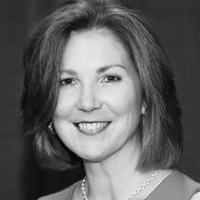

dee adams nikjeh

Dee Adams Nikjeh, PhD, CCC-SLP

Dr. Nikjeh is co-chair of the Health Care Economics Committee of the American Speech Language and Hearing Association (ASHA). She has appeared before the U.S. Dept of Health and Human Services on behalf of ASHA to propose new diagnostic codes and modifications of existing codes for the benefit of speech-language pathologists.  Dr. Nikjeh is an ASHA advisor to the American Medical Association Health Care Practitioner Advisory Committee where she has presented speech-language pathology procedure codes for valuation of professional service. Her clinical experience spans thirty years.  She provides services for patients of West Coast Ear, Nose and Throat Association specializing in endoscopic procedures for evaluation and management of voice disorders.  Dr. Nikjeh is a consultant for the United States Dept. of Justice, Civil Division-Fraud Section and is an associate of Fearon & Levine, a national consulting firm that focuses on practice management and payment policy in outpatient rehabilitation settings. Dr. Nikjeh is an ASHA Fellow and has served on ASHA's Legislative Council and Executive Board of the Council of State Association Presidents. She is a past-president of the Florida Association of Speech Language Pathologists and Audiologists.


Related Courses

Speech Language Pathology Healthcare Coding and Payment Update: What’s New for ‘22!
Presented by Dee Adams Nikjeh, PhD, CCC-SLP, ASHA Fellow
Video

Presenter

Dee Adams Nikjeh, PhD, CCC-SLP, ASHA Fellow
Course: #10031Level: Intermediate1.5 Hours
  'explained well and organized to be able to understand what is said'   Read Reviews
Up-to-date knowledge of healthcare code sets, including Current Procedural Terminology (CPT) and International Classification of Diseases, 10th revision (ICD-10) diagnostic codes, is a MUST for optimal professional practice. The latest modifications impacting SLP clinical practice and claim submissions are discussed, as well as relevant adjustments in the 2022 Medicare Physician Fee Schedule.

Payment for SLP Services: Navigating Payer Sources, Payment Systems, & Practice Settings
Presented by Dee Adams Nikjeh, PhD, CCC-SLP, ASHA Fellow
Video

Presenter

Dee Adams Nikjeh, PhD, CCC-SLP, ASHA Fellow
Course: #9453Level: Intermediate1 Hour
  'I liked the concise slides and charts that made it easier to understand a very necessary, although very dry knowledge set'   Read Reviews
Accurate payment for SLP services depends on compliance with payer guidelines (e.g., coverage, supervision) and the specific payment system (e.g., prospective payment, fee-for-service) relevant to the practice setting (e.g., inpatient, outpatient) in which the service is provided. This course will define and illustrate the interrelationship of these three professional elements, including their relevance to supervision requirements, and will provide resources for further assistance.

Back to Basics: Goal Writing for School-based SLPs
Presented by Marva Mount, MA, CCC-SLP
Video

Presenter

Marva Mount, MA, CCC-SLP
Course: #8977Level: Introductory1 Hour
  'Good examples given to support how to write SMART goals and what is needed'   Read Reviews
Once eligible for services, students need well-crafted goals in order to meet expectations. This course addresses writing SMART goals for students from collected data.

Back to Basics: Let's Talk Data Collection
Presented by Marva Mount, MA, CCC-SLP
Video

Presenter

Marva Mount, MA, CCC-SLP
Course: #9246Level: Introductory1 Hour
  'The topic and strategies shared were very realistic and feasible to implement'   Read Reviews
This course will examine a variety of data collection options for the speech-language pathologist, primarily in the school-based setting.

AAC: Taking the ‘OMG’ out of Report Writing and Treatment Planning
Presented by Kim Winter, MA, CCC-SLP
Video

Presenter

Kim Winter, MA, CCC-SLP
Course: #10536Level: Intermediate1.5 Hours
  'This course was great!! The speaker was excellent and provided a lot of relevant information that is practical to the SLP conducting an AAC evaluation and writing goals'   Read Reviews
This course describes how to document augmentative/alternative communication (AAC) assessment outcomes and treatment planning for adult clients, in order to obtain funding of a speech-generating device (SGD) via Medicare or other third-party payers. Medicare SGD coverage, access methods to assess, required evaluation report elements, and client competencies to target in goals and treatment are discussed.