Is there a contraindication for a flap and would an obturator be helpful for children with 22q.11 who also have cardiac and oxygen needs?
Answer
Pharyngeal flaps for surgery continue to be the most commonly done surgery for treatment of VPD in children with 22q. Some centers tend to believe that this has a higher success rate than other surgical options. We do pharyngeal flaps on children with history of cardiac defects all the time. As with any surgery, the physicians have to get clearance from the cardiology providers in order to proceed. Often we will get a sleep study on patients if they have any airway concerns prior to the procedure. In fact many places will actually have tonsils and adenoids removed before pharyngeal flap surgery to help lessen the risk of further airway obstruction. We know with any pharyngeal flap surgery there is always (although small) a risk of obstructive sleep apnea. In terms of speech prostheses - we do not routinely use these but I do think that they are a good treatment option for children who cannot have surgery or where families do not want surgery for their child. I think you need to have them made by a prosthodontist who is extremely patient with challenging pediatric patients. And often it is a palatal lift that is the better fit as opposed to an obturator because many of them do have enough palate tissue it just doesn't move as well.
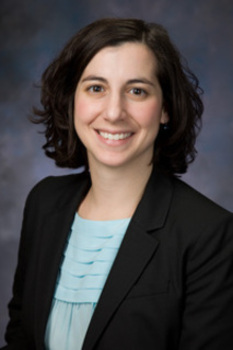
Adriane Baylis, Ph.D., CCC-SLP, is Speech Scientist and Speech-Language Pathologist for the Section of Plastic and Reconstructive Surgery at Nationwide Children's Hospital (Columbus, OH). Dr. Baylis serves as Co-Director of the 22q Center at Nationwide Children’s Hospital and also provides clinical services to the Cleft Lip and Palate Center.
Adriane Baylis, Ph.D., CCC-SLP
Adriane Baylis, Ph.D., CCC-SLP, is Speech Scientist and Speech-Language Pathologist for the Section of Plastic and Reconstructive Surgery at Nationwide Children's Hospital (Columbus, OH). Dr. Baylis serves as Co-Director of the 22q Center at Nationwide Children’s Hospital and also provides clinical services to the Cleft Lip and Palate Center. Dr. Baylis' primary clinical and research interests include speech-language disorders associated with cleft palate and velopharyngeal dysfunction, speech outcome measures, and communication disorders associated with 22q11.2 deletion syndrome. She also serves as a lecturer for The Ohio State University and is actively involved with American Cleft Palate-Craniofacial Association and ASHA Special Interest Group 5: Speech Science and Orofacial Anomalies.
Related Courses
1https://www.speechpathology.com/slp-ceus/course/20q-induced-laryngeal-obstruction-overview-1076120Q: Induced Laryngeal Obstruction - An Overview for Speech-Language PathologistsThe nature of induced laryngeal obstruction, including comorbidities and causes, and the speech-language pathologist’s role in evaluation and treatment of this disorder are described in this course. Current diagnostic and treatment practices and research updates pertaining to the condition are discussed.textual, visual129USDSubscriptionUnlimited COURSE Access for $129/yearOnlineOnlySpeechPathology.comwww.speechpathology.com20Q: Induced Laryngeal Obstruction - An Overview for Speech-Language PathologistsThe nature of induced laryngeal obstruction, including comorbidities and causes, and the speech-language pathologist’s role in evaluation and treatment of this disorder are described in this course. Current diagnostic and treatment practices and research updates pertaining to the condition are discussed.10761OnlinePT60M
The nature of induced laryngeal obstruction, including comorbidities and causes, and the speech-language pathologist’s role in evaluation and treatment of this disorder are described in this course. Current diagnostic and treatment practices and research updates pertaining to the condition are discussed.
2https://www.speechpathology.com/slp-ceus/course/vocal-fold-paralysis-11280Vocal Fold ParalysisSpeech pathologists may encounter patients with vocal fold paralysis in various clinical, hospital, and rehabilitation settings. This course provides an overview of the etiology, evaluation, prognosis, and management options, including voice therapy techniques.auditory, textual, visual129USDSubscriptionUnlimited COURSE Access for $129/yearOnlineOnlySpeechPathology.comwww.speechpathology.comVocal Fold ParalysisSpeech pathologists may encounter patients with vocal fold paralysis in various clinical, hospital, and rehabilitation settings. This course provides an overview of the etiology, evaluation, prognosis, and management options, including voice therapy techniques.11280OnlinePT60M
Speech pathologists may encounter patients with vocal fold paralysis in various clinical, hospital, and rehabilitation settings. This course provides an overview of the etiology, evaluation, prognosis, and management options, including voice therapy techniques.
3https://www.speechpathology.com/slp-ceus/course/chronic-cough-evaluation-10793Chronic Cough: EvaluationThis is Part 1 of a 2-part series. Chronic cough affects millions of people per year, and SLPs can be an integral part of evaluation and management of this disorder. Characteristics of chronic cough and its impact on quality of life are discussed in this course. In addition, SLP evaluation of chronic cough to identify candidates for voice therapy management is described in the context of medical evaluation and management.auditory, textual, visual129USDSubscriptionUnlimited COURSE Access for $129/yearOnlineOnlySpeechPathology.comwww.speechpathology.comChronic Cough: EvaluationThis is Part 1 of a 2-part series. Chronic cough affects millions of people per year, and SLPs can be an integral part of evaluation and management of this disorder. Characteristics of chronic cough and its impact on quality of life are discussed in this course. In addition, SLP evaluation of chronic cough to identify candidates for voice therapy management is described in the context of medical evaluation and management.10793OnlinePT60M
This is Part 1 of a 2-part series. Chronic cough affects millions of people per year, and SLPs can be an integral part of evaluation and management of this disorder. Characteristics of chronic cough and its impact on quality of life are discussed in this course. In addition, SLP evaluation of chronic cough to identify candidates for voice therapy management is described in the context of medical evaluation and management.
4https://www.speechpathology.com/slp-ceus/course/laryngectomy-basics-introduction-to-voice-10299Laryngectomy Basics: An Introduction to Voice and Pulmonary ChangesBasic clinical management skills related to pulmonary function and communication after a total laryngectomy are described in this course. Information about medical/surgical treatments, anatomic and physiologic changes, communication options, and pulmonary rehabilitation management is provided.auditory, textual, visual129USDSubscriptionUnlimited COURSE Access for $129/yearOnlineOnlySpeechPathology.comwww.speechpathology.comLaryngectomy Basics: An Introduction to Voice and Pulmonary ChangesBasic clinical management skills related to pulmonary function and communication after a total laryngectomy are described in this course. Information about medical/surgical treatments, anatomic and physiologic changes, communication options, and pulmonary rehabilitation management is provided.10299OnlinePT60M
Basic clinical management skills related to pulmonary function and communication after a total laryngectomy are described in this course. Information about medical/surgical treatments, anatomic and physiologic changes, communication options, and pulmonary rehabilitation management is provided.
5https://www.speechpathology.com/slp-ceus/course/respiratory-muscle-strength-training-and-9282Respiratory Muscle Strength Training and Speech-Language Pathologists: Part 1This is Part 1 of a two-part series. This course will provide an overview of respiration and why respiratory muscle strength training is important. Appropriate diagnoses for patient referral, including COVID-19, will be examined, as well as evidence for use of respiratory muscle strength training. (Part 2 - Course 9283)auditory, textual, visual129USDSubscriptionUnlimited COURSE Access for $129/yearOnlineOnlySpeechPathology.comwww.speechpathology.comRespiratory Muscle Strength Training and Speech-Language Pathologists: Part 1This is Part 1 of a two-part series. This course will provide an overview of respiration and why respiratory muscle strength training is important. Appropriate diagnoses for patient referral, including COVID-19, will be examined, as well as evidence for use of respiratory muscle strength training. (Part 2 - Course 9283)9282OnlinePT60M
This is Part 1 of a two-part series. This course will provide an overview of respiration and why respiratory muscle strength training is important. Appropriate diagnoses for patient referral, including COVID-19, will be examined, as well as evidence for use of respiratory muscle strength training. (Part 2 - Course 9283)