iSpeechPathology.com – Call us: 800-242-5183
SpeechCom - We're Hiring - Join our dynamic team!

Student Entitlement and Faculty Communication with the Millennial Student

Student Entitlement and Faculty Communication with the Millennial Student
Jennifer C. Friberg, EdD, CCC-SLP/L, Colleen Visconti, PhD, CCC-SLP, Sarah M. Ginsberg, EdD, CCC-SLP
March 17, 2015

This text-based course is a transcript of the webinar, “Student Entitlement and Faculty Communication with the Millennial Student,” presented by Colleen F. Visconti, PhD, CCC-SLP; Jennifer C. Friberg, Ed.D, CCC-SLP, BRS-CL;  and Sarah M. Ginsberg, Ed.D, CCC-SLP.

>> Dr. Colleen Visconti:  We are here to discuss student entitlement and faculty communication with millennial students.  We have been paid an honorarium for this presentation by SpeechPathology.com.  In addition, we have authored the book, The Scholarship of Teaching and Learning in Speech Language Pathology and Audiology, by Plural Publishing.  Many of the concepts presented in today’s course are from our book.  We do benefit financially from royalty payments from the sale of the book.  We have no relevant nonfinancial relationships to disclose.

Learning Outcomes

The learning objectives for today are: 

  • After this course, participants will be able to described characteristics of millennial generation students. 
  • After this course, participants will be able to explain the relationship between millennial generation students and teaching and learning issues.  
  • Participants will also be able to identify key communication strategies to use in teaching millennial generation learners in undergraduate and graduate CSD programs.   

Overview

The first thing we would like to know is a little about who is in our audience.  Are any of you community supervisors?  Are any of you teaching faculty?  University or clinical supervisors?  We will start off by talking about who are the millennial students and what we know about them as students.  Then we will move on to talking about issues that are surrounding entitlement, starting first with what entitlement is and then how we see millennial and entitlement going together.  We will move on to talking about teaching and supervising these millennial learners and how to do so effectively.  Finally, we will go over guidelines to successful communication for both faculty and clinical educators. 

The Millennial Student

The millennial students are the students that have been referred to as the “Nintendo Generation,” the “Me” generation, or Generation Y.  Most of the literature when you look at how they define this group of students, they tend to be born sometime between 1982 and 2002.  These students are very child-centric, or their society was very child-centric. They were reinforced for participation.  These were the children who were on the soccer field and just because they showed up, got a trophy at the end. Or they were in any type of competition, came to class, and got ribbons and stickers for participating.  Their self-esteem was very much reinforced throughout their childhood.  They also have a great deal of parental involvement.  I am sure many of you have heard about “helicopter parents” or have dealt with helicopter parents who are just hovering over them making sure that everything is going the way it should be going or the way that the parent wants it to go.  That parenting style also influences the way those students are going to be acting both in our classroom and clinical settings.  One thing to caution you is that although we talk about these generalizations, they really are generalizations.   There are students that we interact with who do not fit the typical mold of the millennial student. 

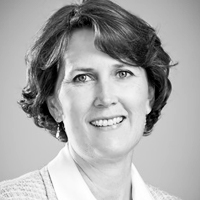
jennifer c friberg

Jennifer C. Friberg, EdD, CCC-SLP/L

Jennifer C. Friberg is an Associate Professor in the Department of Communication Sciences and Disorders at Illinois State University. She is an active researcher in the areas of teaching and learning, serving as a SOTL Scholar-Mentor at Illinois State University. She is the co-author of the book The Scholarship of Teaching and Learning in Speech-Language Pathology and Audiology: Evidence-Based Education.


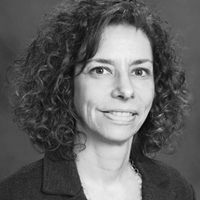
colleen visconti

Colleen Visconti, PhD, CCC-SLP

Colleen is a Professor/Chair of the Department of Communication Sciences and Disorders at Baldwin-Wallace University. Her research interests include: Problem-Based Learning, undergraduate research experiences, and EBP with functionally nonverbal children. She is co-author of the book The Scholarship of Teaching and Learning in Speech-Language Pathology and Audiology: Evidence-Based Education.


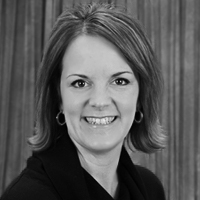
sarah m ginsberg

Sarah M. Ginsberg, EdD, CCC-SLP

Sarah M. Ginsberg is Professor of Speech-Language Pathology at Eastern Michigan University.  She is co-author of Scholarship of Teaching and Learning in Speech-Language Pathology and Audiology: Evidence-Based Education (Plural Publishing), and numerous publications regarding scholarship of teaching and learning and communication sciences and disorders.  Her work has appeared in To Improve The Academy, the Journal of the Scholarship of Teaching and Learning, and The Teaching Professor.  


Related Courses

The Ripple Effect of Stuttering: A Community-Based Approach
Presented by Craig Coleman, MA, CCC-SLP, BCS-F, ASHA Fellow, Mary Weidner, PhD, CCC-SLP
Video
Course: #9217Level: Intermediate2 Hours
This is Part 2 of a four-part series. The stuttering experience has a ripple effect that extends far beyond the child who stutters. Parents, teachers, peers, and others must possess both knowledge and skills to best support children who stutter. This course will highlight new clinical tools and resources to provide a community-based treatment approach for stuttering. (Part 1 - Course 9278, Part 3 - Course 9301, Part 4 - Course 9304)

20Q: Infection Control Strategies for SLPs
Presented by A.U. Bankaitis Smith, PhD
Text
Course: #9729Level: Intermediate1 Hour
Speech-language pathologists are expected by policy authorities to apply appropriate measures to protect patients, co-workers and themselves in clinical situations that may expose individuals to infectious microbes. This article provides practical guidelines for implementing infection control principles within the context of the COVID-19 pandemic, including discussion of personal protective equipment (PPE) and disinfecting and cleaning products.

Thickened Liquids in Clinical Practice: The Plot “Thickens”
Presented by Angela Mansolillo, MA, CCC-SLP, BCS-S
Video
Course: #10497Level: Intermediate1 Hour
Clinicians who utilize thickened liquids in their clinical practice are aware of their benefits, but what about the risks and contraindications? Advantages and disadvantages of thickened liquids are reviewed in this course with a focus on clinical outcomes, including impacts on medication administration, lung health, and hydration. Product types are evaluated to facilitate appropriate choices for individual clients.

SLP in the NICU: An Overview
Presented by Anna Manilla, MS, CCC-SLP, CLC
Video
Course: #11267Level: Introductory1 Hour
This course provides an introductory overview of Speech-Language Pathology services in the Neonatal Intensive Care Unit (NICU), including the unique environment, the SLP’s role, and key components of neonatal care. Topics include cue-based and supportive feeding strategies, instrumental assessments, and approaches for empowering and supporting parents and caregivers.

Dysphagia in Neurodegenerative Disease
Presented by Debra M. Suiter, PhD, CCC-SLP, BCS-S
Video
Course: #9732Level: Intermediate1 Hour
Dysphagia is common in individuals with amyotrophic lateral sclerosis (ALS) and Parkinson’s disease. This course discusses the underlying pathophysiology and appropriate treatment programs for each disease, as well as use of alternate methods of nutrition/hydration.