
Starting an Aphasia Support Group

Categories: ,

Question:

I would love to start an aphasia support group at my hospital or even in the community.  What are some steps to start the process?  Are there any approvals from the doctors, psychologist or other professionals in the care of persons with aphasia?

Answer:

If you started a support group at your hospital, obviously you would have to deal with your hospital's structure.  But in the community, there should be no approvals because you are not doing anything that is professionally out of your scope of practice or in someone else’s scope.  I don't present myself at my stroke support group as, “Hi, I'm here as a speech‑language pathologist” necessarily.  They know that.  I also run a stroke support group, not just an aphasia support group and I encourage you to consider that option.  But other than the organization’s or facilities’ specific guidelines, there are no reasons that I know of that there would be any barrier to your doing this, as long as you don't step over the boundary and become a psychologist.    

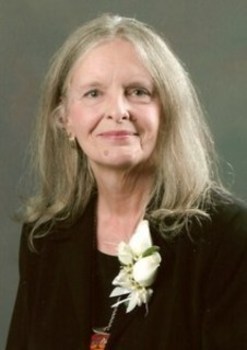
Barbara B. Shadden is a University Professor Emeritus in Communication Disorders and Co-Director of the Office for Studies on Aging at the University of Arkansas. Dr. Shadden has published and presented extensively on topics in aging, neurogenics, discourse, and augmentative communication, including five textbooks and editorship of five journal issues. 

Related Classes

Presenter Course Action
Presenter: suzanne redmond
Suzanne Redmond

Darlene S. Williamson

Melissa Richman
Principles of Aphasia Group Treatment
CEUs/Hours Offered: ASHA/0.1 Intermediate, Professional; CASLPA/1.0
Recorded Course: #3872 · Duration: 1 hour
This presentation will describe one model for facilitating aphasia groups within the context of the Life Participation Approach to Aphasia (LPAA). This model provides a hierarchical structure applicable to varying severity levels and is used to improve participation and communication through acquisition of new skills and carryover of communication strategies. While we utilize this model in the context of the Life Participation Approach to Aphasia, we will demonstrate how these principles can easily translate to a wide variety of treatment settings.
Presenter: candace p vickers
Candace P. Vickers
A Social Networks Approach to Aphasia: Group Therapy and Communication Partner Training
CEUs/Hours Offered: ASHA/0.1 Intermediate, Professional; CASLPA/1.0
Recorded Course: #3718 · Duration: 1 hour
This presentation will introduce participants to the foundations of a social networks approach to both assessing and treating aphasia, with a primary emphasis on treatment approaches consistent with a social approach to aphasia: group therapy and communication partner training. The introductory section will provide an overview of group therapy and highlight recent research indicating how participating in aphasia groups may enhance social networks and a sense of social connection versus social isolation. Specific group therapy approaches and techniques will be discussed. The presentation will conclude with an overview of current approaches to communication partner training of persons with aphasia.
Presenter: barbara b shadden
Barbara B. Shadden
Coping with the Impact of Aphasia: What Do Significant Others Need and How Can SLPs Help?
CEUs/Hours Offered: ASHA/0.1 Introductory, Professional; CASLPA/1.0
Recorded Course: #5068 · Duration: 1 hour
SLPs are trained to be advocates for clients with aphasia and to focus on improving each client’s communicative success. From this perspective, significant others are important primarily in terms of the ways in which they can be trained to support the client’s communication. This course shifts the focus to the needs of significant others (to caregivers), identifying what is known about the impact of aphasia on family members, and describing ways in which SLPs can assess and address the psychosocial and communicative needs of these individuals as well.
Presenter: denise mccall
Denise McCall
Steps to Success with Technology for Individuals with Aphasia
CEUs/Hours Offered: ASHA/0.1 Introductory, Professional; CASLPA/1.0
Recorded Course: #5077 · Duration: 1 hour
This course will demonstrate: 1) the process of selecting technology/programs to support message formulation and delivery based on the communication needs and abilities of an individual with aphasia; 2) the use of supportive techniques that facilitate use of technology; 3) the steps that assure successful use of technology in everyday life. Video presentations of interventions and outcomes will be used to demonstrate ways that technology can empower individuals with aphasia to actively participate in communications with families, friends and the community.
Presenter: sarah wallace
Sarah Wallace
Use of AAC Devices and Strategies for People with Aphasia
CEUs/Hours Offered: ASHA/0.1 Introductory, Professional; CASLPA/1.0
Text Course: #4208 · Duration: 1 hour
The purpose of this course is to enhance participants' knowledge in the area of augmentative and alternative communication (AAC) and aphasia with particular emphasis on recent advancements in this area. The presentation will cover AAC challenges unique to the area of aphasia, evaluation techniques relevant to AAC and aphasia, and devices and strategies recommended for this population.